
If your chickens are coughing, sneezing, breathing noisily or opening their mouths to breathe, do not start by asking, “Which drug should I buy?” Start with a better question: “What is making these birds struggle to breathe?”
That difference matters. A chicken can cough or gasp because of an infection, but heat, ammonia, dust, poor ventilation and mould can also irritate the respiratory system. Some serious diseases can look alike in the first few hours. That is why one symptom should never be treated as a diagnosis.
This guide is written for Nigerian and African poultry farmers who need a practical way to think through respiratory problems. It will help you recognise the warning signs, check the poultry house, understand the major diseases that can cause similar symptoms, know when the situation is urgent, and know when you need a veterinarian and laboratory testing.
If you are seeing other signs as well:poor appetite, abnormal droppings, weakness, reduced egg production or sudden deaths:start with our Signs of a Sick Chicken guide. For the wider disease picture, use the Poultry Diseases and Symptoms in Nigeria master guide.
First: what counts as a respiratory sign in chickens?
Farmers describe respiratory problems in different ways. You may say your birds are “making noise,” “breathing hard,” “catarrh is coming from the nose,” or “they are stretching their necks.” Those descriptions are useful. Watch the birds closely and look for the exact pattern.
- Coughing: repeated forceful sounds or movements that suggest irritation in the airway.
- Sneezing: short, sharp expulsions that may occur with dust, ammonia, mild irritation or infection.
- Rales: rattling, crackling or wet breathing sounds. Farmers may describe this as “noise in the chest.”
- Gasping or open mouth breathing: the bird breathes with its beak open, sometimes stretching the neck.
- Nasal discharge: clear, sticky or thicker material around the nostrils.
- Watery or foamy eyes: often seen with upper respiratory irritation or some infections.
- Swollen face or eyes: swelling around the eyes or sinuses can help narrow the list of possible causes.
- Head shaking: birds may shake their heads when mucus, dust or irritation affects the upper airway.
But here is the important part: none of these signs by itself tells you the disease. Newcastle disease can cause coughing, sneezing, gasping and rales, but so can other infections. The World Organisation for Animal Health (WOAH) specifically notes that Newcastle can resemble avian influenza and requires laboratory testing for confirmation.
Before thinking about disease, check the poultry house
When several birds start sneezing or breathing badly, walk the house before you reach for medication. The environment may be causing the problem, making an infection worse, or doing both at the same time.
1. Is it too hot?
A hot bird pants. That means open mouth breathing does not automatically mean respiratory disease. If many birds are panting during the hottest part of the day, holding their wings away from their bodies, crowding near cool areas or drinking heavily, heat stress moves high on the list.
Compare the situation with our Heat Stress in Broilers guide. If panting reduces when temperature and airflow improve, that tells you something important. If the birds continue coughing, sneezing, producing nasal discharge or showing swollen eyes, there may be more going on than heat alone.
2. Can you smell ammonia?
If the house stings your eyes or nose, the birds have been breathing that air long before you noticed it. Ammonia builds up when litter is wet, manure accumulates and ventilation is poor. FAO guidance on small scale poultry production notes that inadequate ventilation and ammonia can contribute to sneezing, running eyes and mucus discharge in poultry.
Do not solve an ammonia problem by masking the smell. Fix the cause. Check drinker leaks, litter moisture, stocking density and airflow. Our Poultry Litter Management guide explains how to keep bedding dry and control ammonia, while the Wet Litter troubleshooting guide helps you trace where excess moisture is coming from.
3. Is the house dusty?
Dust from dry litter, feed, feathers and poor housekeeping can irritate the eyes and respiratory tract. Harmattan can make the problem worse in parts of West Africa. If respiratory signs appear when litter is being disturbed, feed is being poured, or the house becomes unusually dusty, note that pattern.
Dust does not mean infection is impossible. Irritated airways may make birds more vulnerable, and an infection may already be present. The point is to remove obvious environmental pressure while the flock is being assessed.
4. Is there mouldy litter, feed or brooder material?
Young birds exposed to heavy mould contamination can develop aspergillosis, sometimes called brooder pneumonia. According to the MSD Veterinary Manual, birds usually become infected by inhaling fungal spores from contaminated material. Wet bedding that later dries can release large numbers of spores when disturbed.
If chicks are gasping, breathing hard, growing poorly or dying and there has been mouldy bedding, hatchery contamination or damp feed, tell your veterinarian. Aspergillosis cannot be confirmed simply because you saw mould.
A quick farmer’s triage: what should you check in the first 10 minutes?
| What you see | What to check immediately | Why it matters |
|---|---|---|
| Open mouth breathing | Temperature, airflow, time of day, deaths | Heat stress can look like respiratory disease |
| Sneezing and watery eyes | Dust, ammonia, ventilation, number of birds affected | Irritation and infection can overlap |
| Rattling/noisy breathing | Nasal discharge, coughing, flock spread | May indicate respiratory tract involvement |
| Swollen face/eyes | Nasal discharge, smell, age of birds, flock history | Coryza and some other infections become more likely |
| Respiratory signs + green diarrhoea or nervous signs | Mortality, vaccination history, speed of spread | Newcastle disease becomes an important differential |
| Respiratory signs + sudden deaths or sharp egg drop | Do not move birds; contact a veterinarian/animal health authority | Avian influenza must be considered and confirmed |
| Young chicks gasping + mould exposure | Bedding, hatchery/brooder material, feed storage | Aspergillosis becomes an important differential |
Chicken Breathing Problem Checklist
- Check heat and airflow.
- Smell for ammonia.
- Look for dust and mould.
- Check nasal discharge, swollen face and foamy eyes.
- Check droppings, nervous signs and egg production changes.
- Record mortality and call a veterinarian if signs are severe or spreading.
Major diseases that can cause respiratory signs in chickens
The purpose of this section is not to help you diagnose by eye. It is to help you understand why the same symptom can point in several directions.
Newcastle disease
Newcastle disease is one of the first serious diseases farmers think about when birds cough, gasp or show nervous signs. WOAH describes it as a highly contagious disease that may show respiratory, digestive or nervous signs. Respiratory signs can include gasping, coughing, sneezing and rales.
What should make you more concerned? Rapid spread through the flock, depression, diarrhoea, twisted necks or other nervous signs, a sharp fall in egg production, unusual eggs, or sudden mortality. But even that pattern is not enough to confirm Newcastle. WOAH warns that Newcastle can look very similar to avian influenza.
PAB rule for farmers: do not diagnose Newcastle from green droppings, coughing or twisted neck alone. Get a veterinarian involved, especially when disease is spreading quickly or deaths are rising.
Avian influenza (bird flu)
Avian influenza is an emergency differential because some forms can spread rapidly and cause major mortality. Nigeria’s September 2006 Nigerian HPAI emergency plan (version 1.4) states that respiratory, nervous and digestive signs can overlap with Newcastle disease, and that confirmatory laboratory testing is needed.
Sudden respiratory disease with unusual deaths, head swelling, nervous signs or a marked egg-production drop requires urgent veterinary assessment; these signs do not confirm bird flu. Follow current notices from the Nigerian veterinary authorities for local outbreak information. The WOAH avian influenza guidance explains the importance of early detection, reporting and biosecurity.
Use our detailed Avian Influenza in Chickens guide for the emergency response steps. If bird flu is suspected, do not move sick birds around, sell them quickly, or move equipment between flocks. Contact a veterinarian or the relevant animal health authority.
Infectious coryza
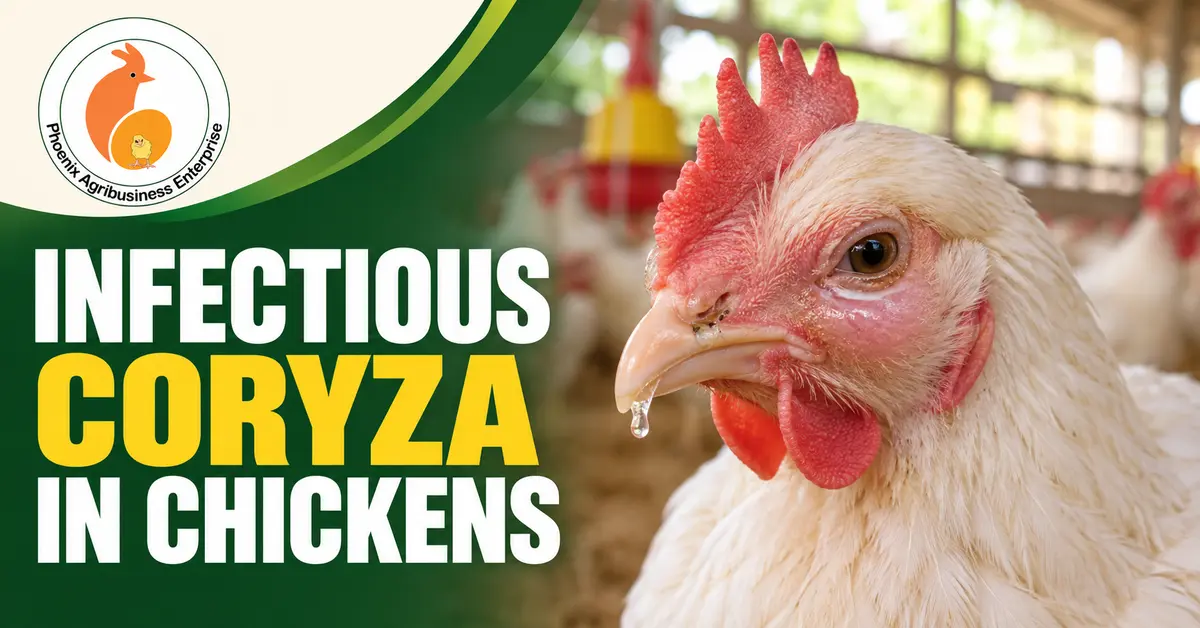
Infectious coryza often attracts farmers’ attention because of the face. Chickens may sneeze, have nasal discharge, become less active and develop swelling around one or both eyes. In severe cases, the eyes may be difficult to open.
The MSD Veterinary Manual’s infectious coryza guidance explains that the disease is caused by Avibacterium paragallinarum and that diagnosis is confirmed by bacterial culture or PCR. That matters because swollen faces are helpful clues, but they are still not a laboratory result.
If you suspect coryza, isolate affected birds as practically as possible, improve biosecurity and call a veterinarian. Do not keep changing antibiotics because the face is still swollen. The MSD Veterinary Manual explains that antimicrobial resistance and recurrence after medication stops can complicate coryza treatment. Treatment choices depend on diagnosis, the organism’s susceptibility, national rules and the current product label, including meat or egg withdrawal requirements.
CRD / Mycoplasma gallisepticum
Farmers often use “CRD” as a general name for any long lasting respiratory problem. That can cause confusion. Chronic respiratory disease is commonly associated with Mycoplasma gallisepticum, but respiratory disease can also involve other organisms at the same time.
Typical signs can include rales, coughing, sneezing, difficulty breathing, nasal discharge and watery or foamy eyes. The MSD Veterinary Manual’s Mycoplasma guidance notes that poor air quality, crowding, stress and concurrent infections can make signs worse. It also explains that infected flocks may remain carriers.
This is one reason “the medicine worked, then the problem came back” is not enough to tell you what disease you had. A veterinarian can help decide whether PCR, serology, culture or other investigation is appropriate for your flock.
Infectious bronchitis
Infectious bronchitis is a contagious viral disease of chickens. Young birds commonly show respiratory signs. Layers may also show egg production problems or poor shell quality, depending on the strain and timing of infection.
WOAH explains in its infectious bronchitis guidance that the virus spreads through airborne exposure, direct contact and contaminated equipment or materials. Some strains can also affect the kidneys.
If your flock is coughing or sneezing and egg quality suddenly changes, infectious bronchitis belongs on the differential list:but it still should not be diagnosed from those signs alone.
Aspergillosis
Aspergillosis is different from the bacterial and viral diseases above. It is a fungal disease, often associated with young birds and heavy exposure to spores from contaminated hatchery material, litter, feed or the environment.
Birds may show difficult or laboured breathing, poor growth, reduced appetite and increased mortality. Unlike many contagious respiratory infections, aspergillosis usually comes from environmental exposure rather than spreading bird to bird.
Reducing further exposure is central to control. The MSD Veterinary Manual guidance on aspergillosis explains that treatment in poultry is generally ineffective. Remove contaminated material without stirring up spores around birds; ask your veterinarian how to reduce exposure safely. Environmental correction does not guarantee recovery. Veterinary examination and laboratory work may be needed to confirm the cause.
What about infectious laryngotracheitis?
It is also worth knowing about infectious laryngotracheitis (ILT), even though farmers may hear less about it than Newcastle or coryza. WOAH describes ILT as a respiratory disease of chickens that can cause difficult breathing, neck extension, gasping, rattling and coughing. Severe cases may involve bloody material from the respiratory tract.
If birds are struggling violently to breathe, stretching their necks or coughing blood stained material, treat the situation as urgent and involve a veterinarian. Do not assume it is “strong CRD.”
How can I tell disease from heat, ammonia or dust?
You may not be able to separate them perfectly without veterinary help, but patterns can guide your next step.
| Pattern | What it suggests | What to do |
|---|---|---|
| Panting mainly during hot hours, wings held away from body | Heat stress is likely contributing | Cool the house safely, improve airflow and water access; keep watching for other signs |
| Watery eyes/sneezing in a house with strong ammonia smell | Air quality is likely contributing | Fix wet litter and ventilation immediately |
| Sneezing rises when dusty litter/feed is disturbed | Dust irritation may be contributing | Reduce dust exposure and observe whether signs persist |
| Signs spread from a few birds to many despite environmental correction | Infectious disease becomes more concerning | Isolate where practical and call a veterinarian |
| Respiratory signs plus facial swelling | Coryza or other sinus/respiratory disease may be involved | Veterinary assessment/testing |
| Respiratory signs plus nervous signs, diarrhoea or rising mortality | Newcastle/avian influenza and other serious disease must be considered | Urgent veterinary/animal health response |
Remember that two problems can exist together. Heat can stress a flock already carrying a respiratory infection. Wet litter can increase ammonia while disease is spreading. Mycoplasma signs can worsen when air quality is poor or another infection is present.
How respiratory problems spread around a poultry farm
Not every respiratory problem spreads from bird to bird. Heat, ammonia and dust affect birds because they share the same environment. Aspergillosis usually comes from breathing in fungal spores from contaminated material. Infectious diseases are different: they may move through respiratory droplets, direct contact, faecal contamination, equipment, crates, footwear, workers or newly introduced birds.
This is why the pattern across the farm matters. If one house develops signs after new birds arrive, after equipment was shared, or after workers moved from a sick flock to a healthy flock, tell your veterinarian. If several pens start sneezing only after dusty litter is turned, that points you toward a different line of investigation.
Do not wait for every bird to become sick before tightening movement. When an infectious cause is possible, separate affected groups where practical, use dedicated footwear and tools, and avoid carrying litter, crates or drinker equipment from the problem house into healthy houses. The full procedure is covered in our poultry biosecurity guide.
Five mistakes farmers should avoid during a respiratory outbreak
- Treating the first symptom as the diagnosis. Sneezing is not automatically CRD. Green droppings are not automatically Newcastle. Open mouth breathing is not automatically infection.
- Mixing several drugs “to cover everything.” This can waste money, complicate diagnosis and increase antimicrobial resistance risk.
- Ignoring the house environment. No medicine can compensate for severe heat, wet litter, strong ammonia, mould or poor airflow.
- Moving sick birds or equipment around the farm. If the problem is infectious, movement can spread it faster.
- Waiting too long before calling a veterinarian. Early professional assessment is especially important when mortality rises, birds develop nervous signs, faces swell, egg production falls sharply, or avian influenza/Newcastle disease is possible.
What should a farmer do immediately?
Step 1: Observe before you disturb the flock
Observe the flock quietly before handling birds. Watch breathing, listen for coughs and rales, and note whether one bird, one section or the whole house is affected. Record the time and temperature. A bird struggling to breathe needs urgent veterinary help; avoid chasing or repeatedly restraining it for photographs or inspection. The MSD Veterinary Manual, physical examination of poultry recommends observation before handling and emergency care for severe respiratory distress. If handling is essential, never invert the bird or compress its breast.
Step 2: Count sick birds and deaths
“Many birds are sick” is not enough information. If possible, record how many birds are in the flock, how many show respiratory signs, how many died today and whether mortality is increasing. This information helps your veterinarian judge urgency.
Step 3: Check feed, water, litter and ventilation
Look for wet litter, blocked drinkers, leaks, dust, mould, strong ammonia and poor airflow. Environmental corrections should not wait for a laboratory result.
Step 4: Reduce unnecessary movement
If an infectious disease is possible, stop moving birds, crates, equipment and workers unnecessarily between pens. Review the Poultry Biosecurity in Nigeria guide and the chicken quarantine and isolation guide.
Step 5: Call a veterinarian early
This is especially important if signs are spreading fast, mortality is rising, birds have swollen heads, nervous signs or diarrhoea, egg production drops suddenly, or you suspect Newcastle disease or avian influenza.
A veterinarian may recommend swabs, blood samples, post mortem examination or other tests. That is how you move from “it looks like CRD” to a defensible diagnosis.
What information should you give the veterinarian?
You can save time by preparing the following:
- bird type and age;
- flock size;
- when the first signs started;
- number of birds affected;
- daily deaths for the last few days;
- main signs: cough, sneeze, rales, gasping, discharge, swelling, diarrhoea, nervous signs;
- feed and water intake changes;
- egg production changes in layers;
- recent vaccinations and dates;
- recent bird purchases or visitors;
- any movement of birds between pens or farms;
- medications already given;
- temperature, ventilation, ammonia, litter and dust problems.
A short video of the birds breathing and a clear photograph of facial swelling or discharge can also help the veterinarian understand what you are seeing, although they do not replace examination or testing.
Why random antibiotics can make the problem harder
Not every respiratory problem is bacterial. Newcastle disease, infectious bronchitis and avian influenza are viral. Aspergillosis is fungal. Heat, ammonia and dust are management/environmental problems.
So if a farmer gives antibiotics to every coughing flock, three things can happen: the real cause remains untreated, useful diagnostic clues may be blurred, and unnecessary antimicrobial use can contribute to resistance.
Antibiotics can be appropriate when a veterinarian diagnoses a bacterial cause. For example, the MSD Veterinary Manual describes antimicrobial treatment for infectious coryza. This is not a treatment recommendation for every coughing flock: the medicine, dose, duration and withdrawal period must follow the diagnosed need, current product instructions and veterinary guidance.
Can vaccination prevent respiratory disease?
Vaccines target particular diseases; a programme does not protect against every cause of respiratory signs. The Merck Veterinary Manual vaccination-programme guidance explains that schedules vary with local conditions and disease challenge. Its example schedules are not a Nigerian flock prescription. Ask your veterinarian and hatchery to agree a programme for your bird type and flock history, following authorised product instructions.
A vaccinated flock can also still develop respiratory signs for other reasons. Poor vaccine handling, incorrect administration, maternal antibodies, field challenge, mixed infections and environmental stress can all affect outcomes.
Use vaccination as part of a wider prevention plan, not as permission to ignore ventilation, litter, water, biosecurity and disease monitoring. Our Poultry Disease Prevention in Nigeria guide explains how those pieces work together.
Respiratory problems in chicks deserve fast attention
Young chicks can deteriorate quickly because they have less body reserve and are sensitive to brooder conditions. If chicks are gasping, piling, coughing or dying, check brooder temperature, airflow, litter, smoke/fumes, dust and mould immediately.
Do not assume every gasping chick has Newcastle disease. Do not assume every brooder problem is “cold.” A brooder that is warm but badly ventilated can still create poor air quality.
If mortality is rising or the cause is not obvious, involve a veterinarian early. Post mortem examination of freshly dead birds can be especially useful.
When is a respiratory problem an emergency?
Contact a veterinarian urgently when you see any of the following:
- sudden or rapidly increasing deaths;
- many birds gasping or struggling to breathe;
- respiratory signs spreading quickly through the flock;
- swelling or bluish/purple colour of comb, wattles or head;
- respiratory signs together with nervous signs;
- greenish diarrhoea with rapid flock spread and mortality;
- a sudden sharp fall in egg production;
- bloody material from the mouth or respiratory tract;
- severe disease after introducing new birds;
- a suspected avian influenza or Newcastle outbreak.
The September 2006 Nigerian HPAI emergency plan, version 1.4 describes overlapping disease signs and the need for laboratory confirmation. It is a historical reference, not a current outbreak notice or contact directory. For a suspected outbreak, contact your veterinarian or local veterinary authority promptly, restrict unnecessary flock movement and follow their current instructions.
How to prevent recurring respiratory problems
Respiratory health starts before the first sneeze.
- Keep air moving without chilling birds. Good ventilation removes moisture, dust and gases.
- Keep litter dry. Wet litter drives ammonia and creates a poorer house environment.
- Control dust. Handle litter and feed in ways that reduce unnecessary airborne particles.
- Do not use mouldy bedding or feed. Store materials dry and inspect them before use.
- Buy healthy chicks or birds from credible sources. Some infections can enter with apparently normal carriers.
- Separate new birds. Follow a sensible quarantine plan before mixing flocks.
- Control visitors, equipment and movement. Respiratory pathogens can travel on people, crates, tools and contaminated material.
- Keep vaccination records. A vaccination history helps a veterinarian interpret an outbreak.
- Record daily mortality, feed, water and egg production. Trends often reveal trouble before the farmer sees dramatic symptoms.
For a full farm level prevention system, use the PAB biosecurity plan. Biosecurity cannot guarantee that a flock will never become sick, but it reduces the chance of bringing infection in and spreading it around the farm.
Frequently asked questions
My chickens are sneezing. Is it CRD?
Not necessarily. Sneezing can come from dust, ammonia, infectious bronchitis, Mycoplasma, coryza and other causes. Check the environment and other signs, then involve a veterinarian if sneezing persists, spreads or is accompanied by breathing difficulty, discharge, swelling or deaths.
Can ammonia make chickens cough?
Poor air quality and ammonia can irritate the respiratory tract and contribute to sneezing, eye irritation and mucus discharge. If you can smell strong ammonia, fix wet litter and ventilation immediately.
Why is my chicken breathing with its mouth open?
Heat is one common reason, especially during hot periods. Respiratory disease, airway obstruction and severe distress can also cause open mouth breathing. Look at temperature, time of day, airflow and other signs before drawing conclusions.
What disease causes swollen eyes and a runny nose in chickens?
Infectious coryza is one important possibility, but it is not the only one. Mycoplasma and other respiratory infections can also affect the eyes and sinuses. A veterinarian can decide whether PCR, culture or other testing is appropriate.
Can Newcastle disease look like bird flu?
Yes. WOAH and Nigerian animal health guidance both recognise important overlap between Newcastle disease and avian influenza. Laboratory testing is needed for confirmation.
Should I give antibiotics immediately when chickens start coughing?
No. Coughing does not prove a bacterial infection. Viral disease, fungal disease and environmental irritation can all produce respiratory signs. Speak with a veterinarian before using antibiotics, especially in food producing birds where diagnosis, antimicrobial choice and withdrawal periods matter.
The farmer’s bottom line
When chickens cough, sneeze, gasp or make noisy breathing sounds, your first job is not to name a drug. Your first job is to read the flock properly.
Check heat. Check air. Check litter. Check dust. Check how fast the problem is spreading. Look for discharge, swollen eyes, diarrhoea, nervous signs, egg production changes and mortality. Then use those observations to decide how urgently you need veterinary help.
Respiratory diseases can look alike, and more than one problem can occur at the same time. A good farmer notices the pattern early. A good veterinarian helps confirm what that pattern actually means.
Veterinary disclaimer: This guide is for farmer education and flock observation. It is not a substitute for examination, laboratory diagnosis or treatment by a qualified veterinarian. If respiratory signs are severe, persistent, spreading through the flock, associated with sudden deaths, nervous signs, marked egg production loss or suspected Newcastle disease/avian influenza, contact a veterinarian or the appropriate animal health authority promptly. Do not rely on one symptom to diagnose a disease, and do not use prescription medicines or antibiotics without appropriate professional guidance.