
If your chickens suddenly start coughing, gasping, passing greenish droppings, twisting their necks or dying quickly, Newcastle disease is one of the serious conditions that must be considered. But do not diagnose it from one sign alone.
Newcastle disease can affect the respiratory system, digestive system and nervous system. Some birds cough and sneeze. Some develop greenish diarrhoea. Some show tremors, paralysis or a twisted neck. Some flocks may lose birds very quickly. Other diseases, especially avian influenza, can look similar. That is why a farmer’s job is to recognise the pattern early, reduce spread and get veterinary help for proper diagnosis.
This guide is for Nigerian and African poultry farmers. It explains the signs farmers commonly notice, what to do first, how Newcastle disease spreads, why laboratory confirmation matters, how vaccination fits into prevention and when the situation is an emergency.
If breathing problems are the main complaint, first compare the flock with our Respiratory Diseases in Chickens guide. If the whole flock looks generally unwell and you are not yet sure where to start, use the Signs of a Sick Chicken guide.
Related poultry health guide: For a broader symptom check before deciding what may be affecting the flock, see our Poultry Diseases and Symptoms in Nigeria guide.
What is Newcastle disease?
Newcastle disease is a highly contagious viral disease of birds. The World Organisation for Animal Health (WOAH) explains that the disease can appear mainly as a respiratory problem, a nervous problem, a digestive problem, or a mixture of these.
That is one reason farmers sometimes get confused. Two farms can both have Newcastle disease and the birds may not look exactly the same. The age of the birds, the strain of virus, vaccination status, other infections and environmental stress can all influence what you see.
In Nigeria, Newcastle disease remains an important poultry problem. A 2026 study covering Plateau, Bauchi and Kano states found Newcastle disease virus circulating widely in backyard poultry. Nigeria’s Federal Ministry of Livestock Development has also included Newcastle disease among priority diseases for national surveillance and has been developing a national strategy for its control.
What are the common signs of Newcastle disease in chickens?
Think in groups of signs rather than looking for one magic symptom.
Respiratory signs
- coughing;
- sneezing;
- gasping;
- rattling or noisy breathing;
- open mouth breathing;
- nasal discharge in some birds.
These signs alone do not prove Newcastle disease. Infectious bronchitis, Mycoplasma/CRD, infectious coryza, avian influenza and even severe environmental irritation can overlap.
Nervous signs
- tremors;
- twisted neck;
- circling;
- paralysis of wings or legs;
- loss of coordination;
- birds falling over or unable to stand.
A twisted neck can be very alarming, but even that is not enough to confirm Newcastle disease by itself. Poisoning, trauma, nutritional problems and other infections can also produce nervous signs.
Digestive signs
- greenish or watery diarrhoea;
- reduced feed intake;
- dehydration;
- weakness.
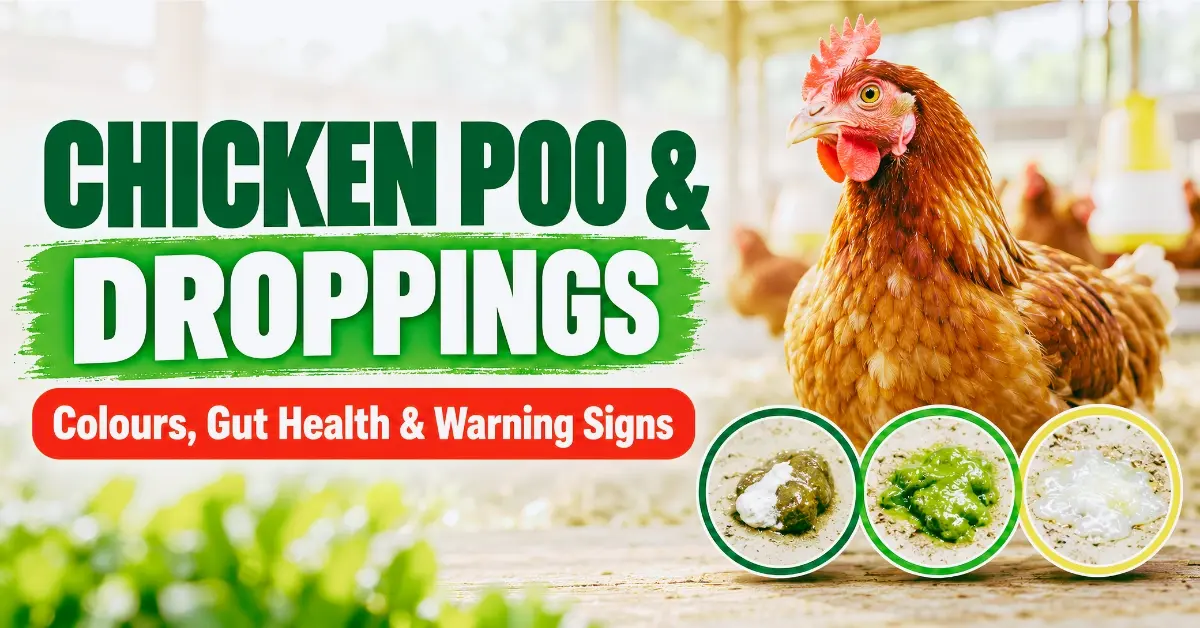
Farmers often associate green droppings directly with Newcastle disease. That is risky. Green droppings can occur for several reasons, including reduced feed intake and other diseases. Our Green Poop in Chickens guide explains why colour alone should not be used as a diagnosis.
Egg production signs
- sharp drop in egg production;
- misshapen eggs;
- poor shell quality;
- watery albumen in some cases.
Mortality
Mortality can vary greatly. Some strains cause mild disease. Virulent strains can cause very heavy losses. WOAH notes that in severe outbreaks mortality can be extremely high.
Suspected Newcastle Disease Checklist
- Look for respiratory signs such as coughing, sneezing or gasping.
- Check for greenish diarrhoea.
- Watch for twisted neck, tremors, circling or paralysis.
- Check for a sudden egg production drop.
- Record how quickly disease is spreading and mortality is rising.
- Restrict movement and contact a veterinarian promptly.
What should make a farmer strongly suspect Newcastle disease?
Concern rises when several of these occur together:
- respiratory signs spreading quickly through the flock;
- greenish diarrhoea together with coughing or gasping;
- twisted necks, tremors, circling or paralysis;
- a sharp fall in egg production;
- rapidly rising mortality;
- recent introduction of new birds;
- poor or uncertain vaccination history;
- recent movement of birds, crates, workers or equipment between farms.
But even a strong pattern is still a suspicion, not a confirmed diagnosis.
Newcastle disease can look like bird flu
This is one of the most important things a farmer should understand. WOAH states that Newcastle disease can present a clinical picture very similar to avian influenza. Both can cause respiratory disease, nervous signs, diarrhoea, production loss and sudden mortality.
That means a flock with coughing, twisted necks and sudden deaths should not simply be labelled “Newcastle” and treated casually. Nigeria has also had recent highly pathogenic avian influenza activity, so serious outbreaks need proper investigation.
If mortality is rising quickly, birds have swollen heads, bluish combs, severe respiratory distress or sudden flock collapse, review the Avian Influenza in Chickens guide and contact a veterinarian or animal health authority promptly.
How does Newcastle disease spread?
Infected birds can shed virus through respiratory secretions and faeces. Spread may happen through:
- direct contact between birds;
- contaminated droppings;
- feed and water;
- boots and clothing;
- crates and transport equipment;
- farm tools;
- vehicles;
- new birds introduced into the flock;
- movement between pens without cleaning and disinfection.
WOAH notes that infected birds may shed virus before obvious signs appear. That is why waiting until “many birds are sick” before tightening biosecurity can be too late.
Use the Poultry Biosecurity in Nigeria guide for a farm level movement control plan and the How to Quarantine Chickens guide before introducing new birds.
What should a farmer do immediately if Newcastle disease is suspected?
1. Stop unnecessary movement
Do not move sick birds, crates, equipment or workers from the affected pen into healthy houses unless absolutely necessary. Do not rush sick or exposed birds to market.
2. Separate affected birds where practical
Isolation will not reverse an outbreak that is already widespread, but it can reduce contact and help your veterinarian assess the problem.
3. Record what is happening
Write down:
- flock size;
- bird age and type;
- number sick;
- number dead each day;
- first date signs appeared;
- vaccination history;
- recent bird purchases;
- recent visitors or equipment movement;
- other signs such as coughing, diarrhoea, nervous signs and egg production changes.
4. Call a veterinarian
Do this early, especially if disease is spreading fast or mortality is rising. A veterinarian can assess the flock, arrange sample collection and determine whether Newcastle disease, avian influenza or another condition is involved.
5. Strengthen biosecurity immediately
Use dedicated footwear and tools for the affected area. Restrict visitors. Clean visible dirt before applying disinfectant. Manage dead birds according to veterinary or official instructions.
Paralysis and leg weakness are not unique to Newcastle disease. When progressive paralysis, weight loss, abnormal pupils or tumours are involved, compare the flock pattern with the signs of Marek’s disease.
How is Newcastle disease diagnosed?
Symptoms can raise suspicion, but confirmation requires laboratory testing. WOAH describes virus isolation and molecular testing among the methods used to confirm Newcastle disease.
A veterinarian may collect swabs or tissue samples depending on the situation. Post mortem findings can support the investigation, but they should not be treated as proof without appropriate testing.
This is especially important because Newcastle disease and avian influenza can overlap so closely.
Is there a treatment for Newcastle disease?
The MSD Veterinary Manual states that no medication has been shown to change the course of virulent Newcastle disease infection. Antibiotics do not cure the virus.
The reference distinguishes this from less virulent infections, where veterinary care for secondary infections may reduce losses. Farmers cannot determine the virus’s virulence from one visible sign, so this distinction is not a reason to treat a suspected outbreak privately.
Contact a veterinarian promptly, restrict movement and follow the disease-control response advised for the flock. Do not sell or move exposed birds while trying different medicines.
Should I give antibiotics when birds have Newcastle like signs?
Not automatically. Antibiotics do not treat Newcastle virus. They may only be relevant if a veterinarian identifies or strongly suspects a bacterial complication.
Blind antibiotic use can waste money, delay proper diagnosis and contribute to antimicrobial resistance.
Source for the treatment and control principles above: MSD Veterinary Manual: Newcastle treatment limits. Medicine selection, use in food-producing birds and withdrawal instructions must be checked with the veterinarian and the applicable product label.
Can vaccination prevent Newcastle disease?
Vaccination is one of the main prevention tools for Newcastle disease, but vaccination must be handled properly.
Nigeria’s Federal Ministry of Livestock Development highlighted Newcastle disease vaccination again in 2026, including the use of a thermostable Newcastle disease vaccine among products registered for use in the country. The Ministry has also identified Newcastle disease as a priority disease in national surveillance work.
Vaccination does not mean every farm should copy one schedule from the internet. The correct programme depends on bird type, hatchery history, maternal antibodies, local disease pressure, vaccine type, farm system and veterinary advice.
Do not use this article as a vaccination schedule. Work with a veterinarian, hatchery or competent poultry health professional to set a programme for your flock.
Why can vaccinated birds still show Newcastle like disease?
A farmer may say, “But I vaccinated. How can this still happen?” Several things can explain that situation:
- poor vaccine storage or broken cold chain;
- incorrect mixing or administration;
- birds drinking uneven amounts of vaccine;
- vaccinating birds under severe stress;
- wrong timing for the flock;
- very heavy field challenge;
- other diseases causing similar signs;
- mixed infections.
This is another reason to investigate instead of assuming “the vaccine failed.”
What about thermostable Newcastle vaccines?
Thermostable vaccines can be useful in settings where maintaining a perfect cold chain is difficult. Nigeria’s livestock ministry has specifically referenced a thermostable Newcastle vaccine registered for avian use.
But “thermostable” does not mean “cannot be damaged.” Farmers should still follow the manufacturer’s storage and administration instructions and veterinary guidance.
Newcastle disease in backyard and village chickens
Backyard poultry can be hit hard because birds may mix freely, vaccination may be irregular and movement between households or live bird markets may be frequent.
A 2026 Nigerian study in Plateau, Bauchi and Kano found widespread Newcastle virus circulation in backyard poultry and noted that farmers used several local names for disease syndromes that were not specific to Newcastle. That finding supports a simple PAB rule: local names and visible signs are useful clues, but they are not laboratory diagnoses.
For village systems, practical prevention includes regular vaccination under local veterinary guidance, reducing contact with unknown birds, controlling movement during outbreaks and improving basic biosecurity.
Can humans catch Newcastle disease?
WOAH describes Newcastle disease as a minor zoonosis. Human infection is uncommon and usually mild, often involving temporary conjunctivitis in people with close occupational exposure.
Farmers and workers should still use sensible hygiene, avoid touching the eyes after handling sick birds, wash hands, and use appropriate protective equipment during suspected outbreaks.
Common farmer mistakes during a suspected Newcastle outbreak
- Calling every green dropping Newcastle disease. Green droppings are not a diagnosis.
- Waiting for twisted necks before acting. Respiratory or digestive signs may appear first.
- Moving sick birds to market. This can spread infection.
- Mixing several antibiotics and hoping one works. Newcastle is viral.
- Ignoring bird flu as a differential. The two diseases can look very similar.
- Assuming vaccination makes Newcastle impossible. Vaccine handling, timing and field challenge matter.
- Calling the problem “Newcastle” without veterinary confirmation. That can delay the correct response.
How to reduce the risk of Newcastle disease on your farm
- use a veterinarian approved vaccination programme;
- buy chicks and birds from traceable sources;
- quarantine new birds before mixing them;
- control visitors and vehicle access;
- clean and disinfect equipment between flocks;
- avoid sharing crates and tools without proper cleaning;
- keep records of vaccination, mortality and bird movement;
- reduce contact with birds of unknown health status;
- report unusual rapid mortality early;
- maintain good litter, ventilation and general flock health.
Vaccination works best as part of a wider prevention system. See our Poultry Disease Prevention in Nigeria guide for the full farm health picture.
Frequently asked questions
Does green poop mean Newcastle disease?
No. Newcastle disease can cause greenish diarrhoea, but green droppings have several possible causes. Look at the entire flock and involve a veterinarian when disease is spreading or other serious signs are present.
Does a twisted neck always mean Newcastle?
No. Twisted neck is an important nervous sign, but it is not unique to Newcastle disease. Other diseases, toxins, trauma and nutritional problems can cause abnormal head or neck posture.
Can a chicken recover from Newcastle disease?
Outcome depends on the virus strain, bird age, immunity and severity of disease. Some birds survive milder infection, while virulent outbreaks can cause heavy mortality. A veterinarian should assess the flock rather than relying on survival as a diagnostic test.
Can antibiotics cure Newcastle disease?
No. Newcastle disease is viral. Antibiotics do not kill the virus. They should only be used when a veterinarian has a justified reason to treat a bacterial complication.
Can vaccinated birds get Newcastle disease?
Vaccination greatly reduces risk when properly used, but it does not make mistakes in storage, administration, timing or heavy field challenge impossible. Similar looking diseases can also occur in vaccinated flocks.
What should I do if several birds suddenly die?
Restrict movement, do not sell or distribute affected birds, record the losses and contact a veterinarian promptly. Sudden mortality with respiratory, nervous or digestive signs requires proper investigation because Newcastle disease and avian influenza can overlap.
The farmer’s bottom line
Newcastle disease is serious, but the biggest mistake is to turn one symptom into a diagnosis.
Do not say “green poop means Newcastle.” Do not say “twisted neck means Newcastle.” Do not say “I vaccinated, so it cannot be Newcastle.” Instead, read the flock: respiratory signs, nervous signs, droppings, egg production, speed of spread, mortality and vaccination history.
Then protect the rest of the farm and call a veterinarian. The faster you move from guessing to proper assessment, the better your chance of limiting losses and avoiding the spread of a serious disease.
Veterinary disclaimer: This guide is for farmer education and flock observation. It is not a substitute for examination, laboratory diagnosis or treatment by a qualified veterinarian. Newcastle disease can resemble avian influenza and other serious poultry diseases. If signs are severe, spreading quickly, associated with nervous signs, sudden egg production loss or rising mortality, contact a veterinarian or appropriate animal health authority promptly. Do not diagnose Newcastle disease from one symptom, and do not use prescription medicines or antibiotics without professional guidance.
Related Posts

Wet Litter in Poultry Houses: Causes, What to Check and How to Fix It
Harmattan Poultry Management: Cold, Dust and Health Checks
What Is Your Chicken Poo Telling You? Colours, Gut Health & Warning Signs
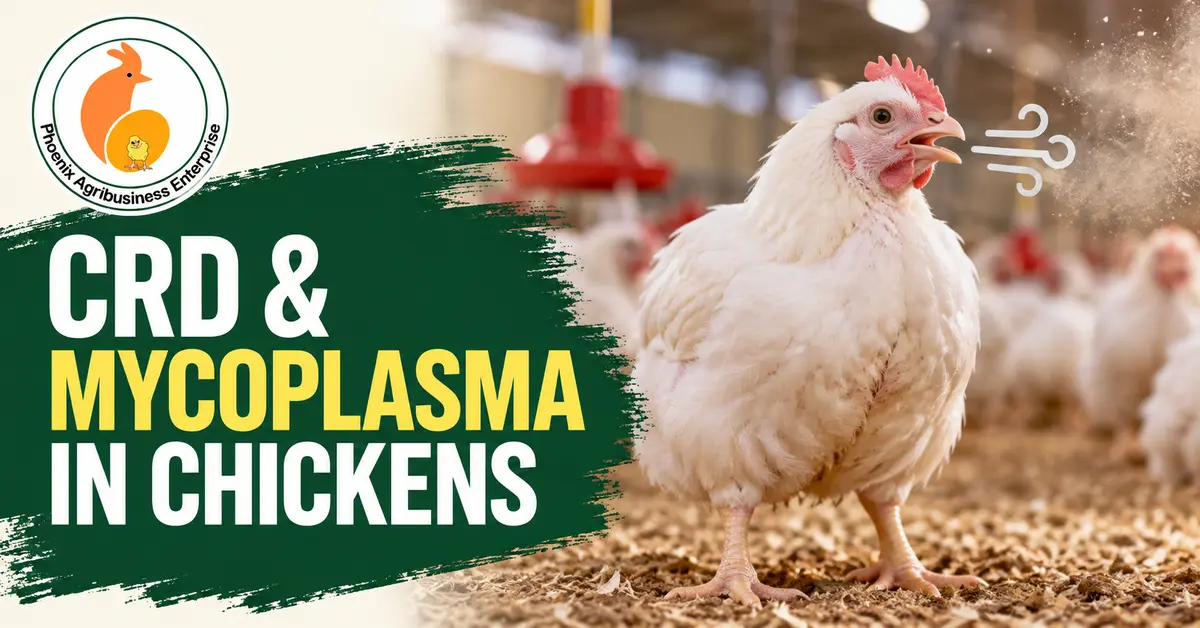
CRD in Chickens: Mycoplasma Symptoms, Why It Keeps Coming Back and What Farmers Should Do


Infectious Coryza in Chickens: Swollen Face, Runny Nose, Diagnosis and What Farmers Should Do
Beak Trimming in Poultry: When It Is Used, Risks and Safer Practice
Infectious Bronchitis in Chickens: Coughing, Egg Drop, Diagnosis and What Farmers Should Do
Green Poop in Chickens: What Nigerian Farmers Should Check