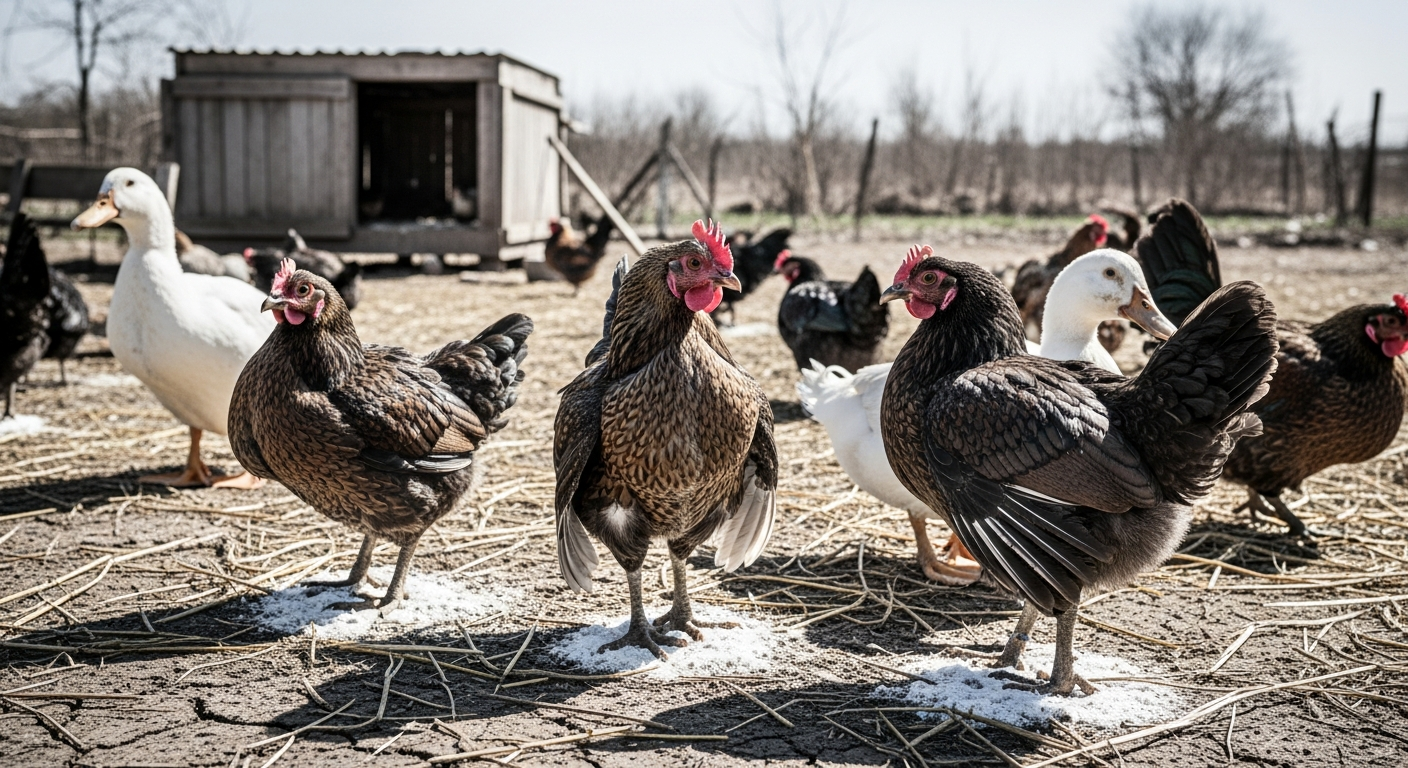
Changes in chicken poo, also known as chicken droppings, can warn you that something is wrong, but colour alone does not diagnose a disease. Green, white, watery, bloody or unusually dark poo or droppings can come from diet, reduced feed intake, parasites, gut disease, stress or other health problems.
This guide is the Phoenix Agribiz starting point for droppings, gut and digestive health problems in chickens. It helps farmers decide what to check first, which signs need urgent attention, and when to move from observation to veterinary or laboratory diagnosis.
Related poultry health guide: Use our Poultry Diseases and Symptoms in Nigeria guide when changes in chicken poo appear alongside breathing problems, weakness, poor growth or deaths.
What Normal Chicken Poo Usually Looks Like
Normal chicken droppings vary during the day. A typical dropping is brown or brownish green with a white urate cap. Cecal droppings are softer, darker and smell stronger than ordinary droppings, and they can be normal when they appear intermittently. Because a normal cecal dropping can look dramatically different from an ordinary dropping, do not label every dark or loose dropping as disease without checking the bird and the flock pattern.
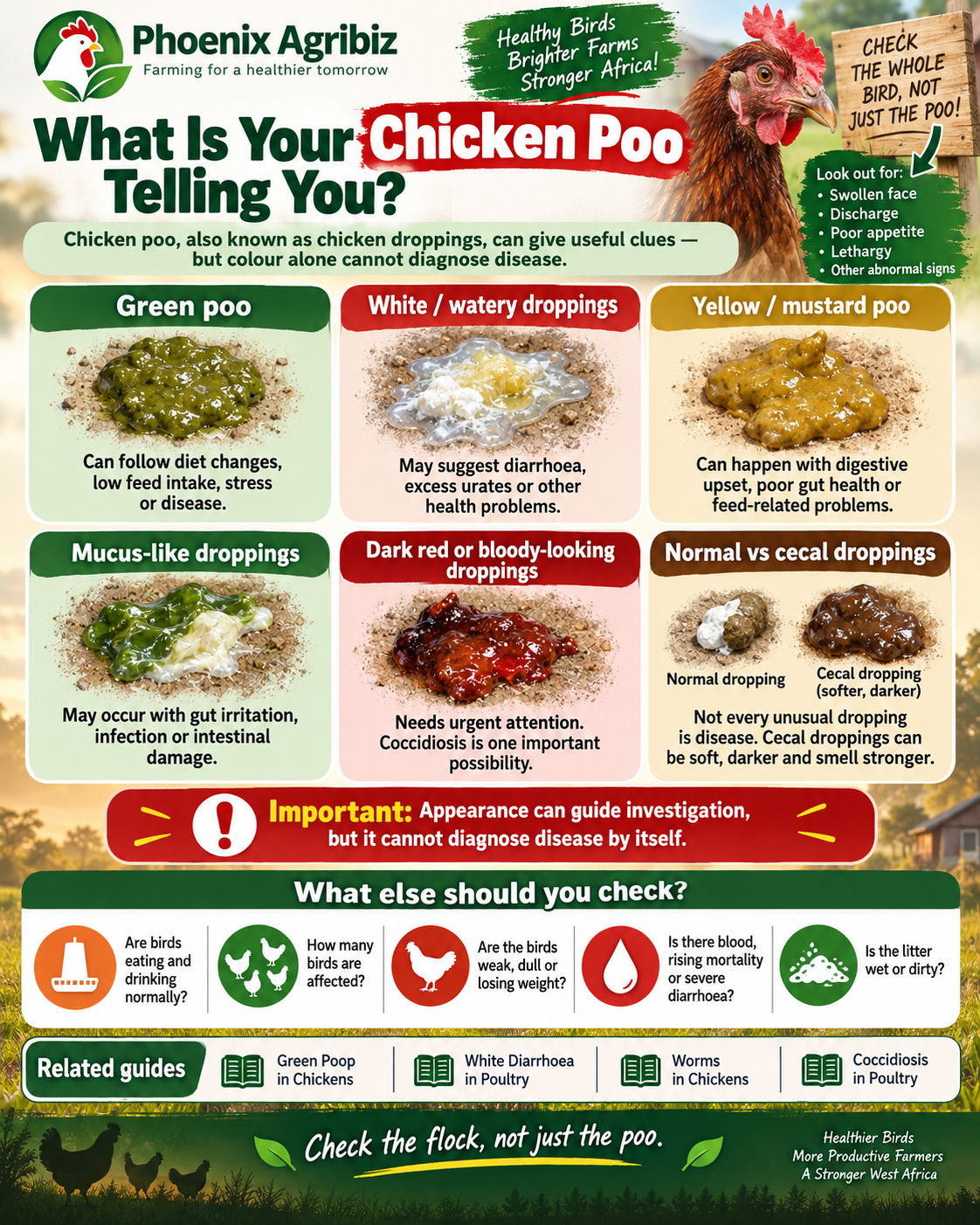
The key question is not simply, “What colour is the poo?” Ask instead:
- Is the change happening once or repeatedly?
- Is one bird affected or several?
- Are the birds still eating and drinking?
- Are they active, gaining weight and laying normally?
- Is there blood, severe dehydration, weakness or rising mortality?
What Farmers Should Check First
- Feed: Check for a sudden ration change, spoiled or mouldy feed, excessive greens or reduced feed intake.
- Water: Make sure birds have clean, unrestricted drinking water and that drinkers are not leaking into the litter.
- Litter: Wet litter increases exposure to important gut pathogens and parasites.
- Flock pattern: Record how many birds are affected, their age, recent mortality and any drop in production.
- Other signs: Look for coughing, huddling, weight loss, pale combs, reduced appetite, dirty vents or weakness.
For a broader whole flock check, see Signs of a Sick Chicken: What Farmers Should Check First.
Green Poo (Green Droppings)
Green droppings can follow harmless dietary changes, especially heavy intake of leafy material. They can also appear when birds are eating less, stressed or sick. Persistent green diarrhoea together with weakness, respiratory signs, weight loss or mortality needs investigation.
Use the full guide: Green Poop in Chickens: What It Means and What to Do.
White Diarrhoea
White droppings are a symptom, not a diagnosis. Pullorum disease caused by Salmonella Pullorum is one important cause in young chicks, but other infections and non infectious problems can produce similar droppings.
In Nigerian poultry, antimicrobial resistance has been documented in poultry associated Salmonella. Diagnosis and, where available, susceptibility testing are more reliable than guessing an antibiotic.
Read: White Diarrhoea in Poultry: Causes and Treatment.
Bloody or Dark Red Poo
Blood in droppings is an important warning sign, but do not wait for obvious blood before considering coccidiosis. Birds may first show watery or mucus like droppings, reduced feed intake, dullness, poor growth or rising mortality. Coccidiosis is an important differential, especially in young birds on litter, but blood alone does not confirm it.
Nigerian research shows that Eimeria infections occur across commercial poultry systems and that wet season conditions can increase risk. In a nationwide Nigerian study using samples collected from 2007 to 2016, 11.23% of examined commercial laying birds were positive for Eimeria, and infection was 2.19 times more likely during the wet season than the dry season. E. tenella and E. necatrix were among the most prevalent species in that study.
See the Coccidiosis in Poultry guide for diagnosis, prevention and treatment context. To understand why the problem keeps cycling between birds and litter, continue with our Eimeria Lifecycle in Chickens guide.
Urgent signs: repeated bloody droppings, pale combs, severe weakness, dehydration, rapid weight loss or rising mortality should not be managed by colour alone. Get veterinary or diagnostic help promptly.
Watery Poo or Droppings
Watery droppings can result from high water intake, heat, diet changes, stress or disease. Persistent watery diarrhoea becomes more concerning when birds stop eating, lose condition, become weak or several birds are affected.
Also check the house itself. Leaking drinkers, wet litter and poor ventilation can worsen flock health problems. See Wet Litter in Poultry Houses and Poultry Litter Management.
Worms and Other Intestinal Parasites
Worms can contribute to poor growth, weight loss, abnormal droppings, pale combs and reduced egg production, but those signs are not unique to worms.
Nigerian studies confirm that helminths occur in both village and intensively managed poultry. Research from south eastern Nigeria documented helminths in village chickens, while work in Kwara Central also found helminths on intensively managed farms.
Do not use a blind calendar rule such as “deworm every eight weeks” for every farm. The best programme considers exposure, farm history, faecal examination where available, product spectrum and reinfection risk.
Read: Worms in Chickens: Signs, Diagnosis, Treatment and Prevention.
Coccidiosis and the Nigerian Farm Environment
Coccidiosis is caused by Eimeria parasites. Birds pick up infective oocysts from contaminated litter, soil, equipment, feed and water. Moisture matters because oocysts need suitable environmental conditions to become infective. Different Eimeria species damage different parts of the intestine, so outbreaks do not always look the same.
Nigerian studies have documented Eimeria across different parts of the country and in both intensive and extensive systems. This is why litter management, stocking pressure, drinker management and farm hygiene belong in every coccidiosis control plan.
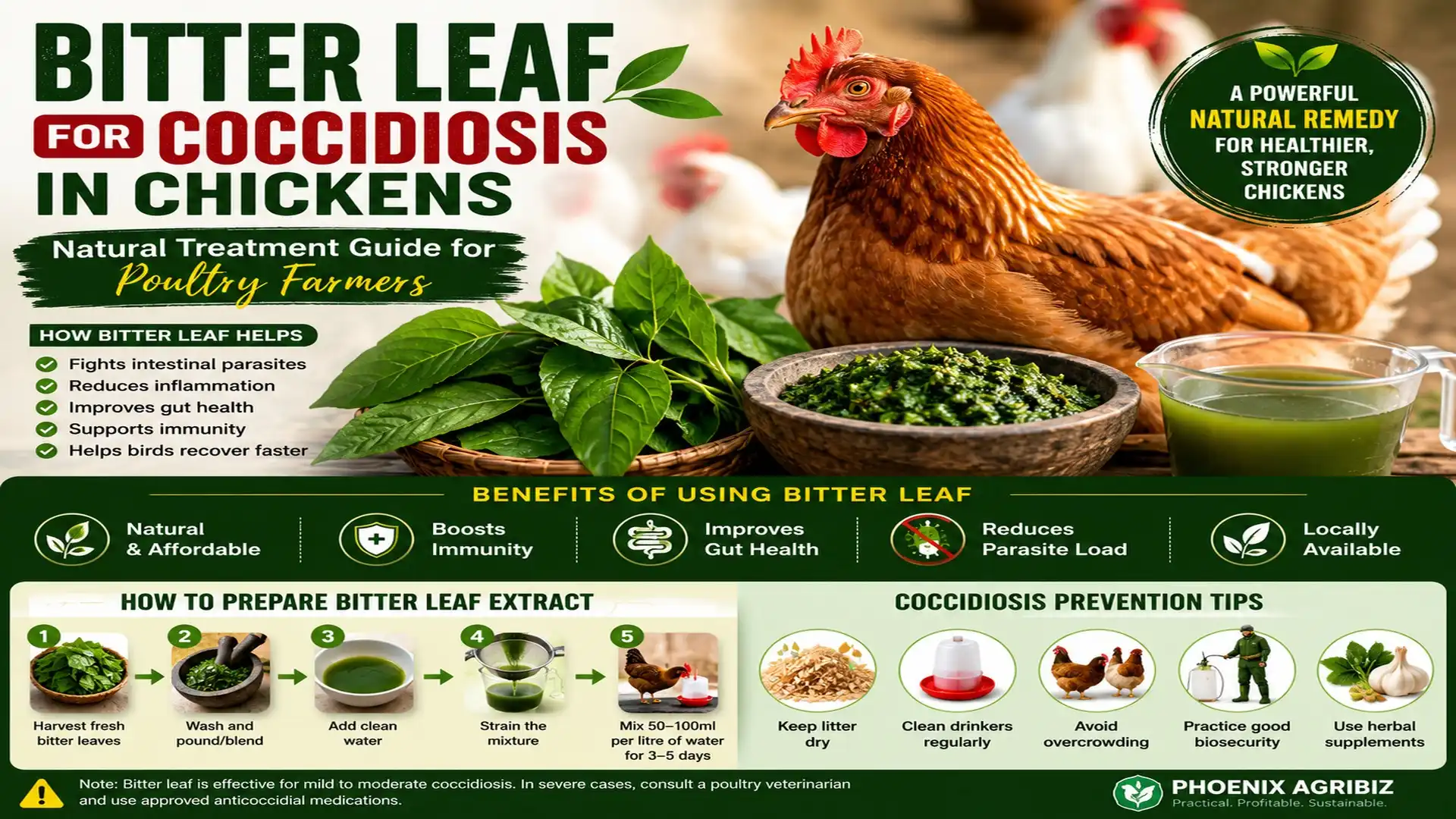
Phoenix Agribiz also maintains a separate evidence based discussion of bitter leaf for coccidiosis. That article separates published research from documented Nigerian farm experience rather than presenting either as a universal treatment rule.
Do Not Diagnose Disease From Dropping Colour Alone
Droppings are useful clues, but different conditions can produce similar changes. Green droppings can accompany reduced feed intake or infectious disease. White droppings can occur with Pullorum disease but are not specific to it. Blood raises concern for intestinal damage, including coccidiosis, but still needs flock context.
A stronger diagnosis combines:
- bird age and production type;
- number of birds affected;
- feed and water intake;
- mortality pattern;
- litter and housing condition;
- other clinical signs;
- faecal examination, post mortem findings or laboratory testing where appropriate.
What You Can Safely Do Before a Diagnosis
- Keep clean drinking water available.
- Keep an appropriate balanced poultry ration available.
- Separate obviously sick birds when infectious disease is possible.
- Correct leaking drinkers and badly wet litter. Where litter is heavily contaminated or soaked during a suspected intestinal outbreak, remove the affected material, replace it with fresh dry litter and fix the source of moisture.
- Record bird age, number affected, mortality and changes in feed or water intake.
- Do not start repeated home remedies or antibiotics simply because the droppings changed colour.
When to Get Veterinary Help
Seek veterinary or diagnostic help when:
- several birds are affected;
- mortality is increasing;
- birds are weak, dehydrated or not eating;
- there is repeated blood in droppings;
- young chicks are deteriorating quickly;
- the problem continues despite correcting obvious feed, water or housing issues; or
- you are considering prescription or restricted medicines.
Quick Farmer Checklist
- Check the flock, not one dropping.
- Check feed and water before assuming disease.
- Check litter moisture and drinker leaks.
- Record age, number affected and mortality.
- Use droppings as clues, not as a final diagnosis.
- Match treatment to the confirmed or strongly supported cause.
- Follow veterinary guidance, approved labels and withdrawal requirements for medicines.
Farmer friendly disclaimer: This guide is for practical poultry health education. It does not replace examination, laboratory diagnosis or treatment advice from a qualified veterinarian or poultry health professional. Severe, persistent, spreading or uncertain disease should be investigated promptly.