Layer farming does not start when the first egg appears. It starts with the quality of the chicks, the way they are brooded, how evenly they grow and whether they reach laying age in good condition.
A flock can look fine during rearing and still perform poorly later if body weight, lighting, feed, water, health or housing were badly managed.
Good egg production begins long before the first egg.
What is layer farming?
Layer farming means raising chickens mainly for table egg production.
Modern layer strains have been selectively bred for high egg output, good feed efficiency and predictable production. They are not “genetically modified” in the ordinary sense of genetic engineering.
The farmer’s job is to help the birds reach their genetic potential through good rearing, feeding, health care, lighting and record keeping.
1. Decide your market before you buy chicks
Before ordering birds, ask:
- Who will buy the eggs?
- What egg size does the market prefer?
- How often will buyers collect?
- What price changes happen through the year?
- Will you sell directly, through retailers or to wholesalers?
- How far is the farm from the market?
Do not build an egg business around the assumption that every tray will sell automatically.
2. Choose the layer strain carefully
Common commercial strains include ISA Brown, Lohmann Brown, Hy Line, Bovans and other established layer lines.
Do not choose by colour alone.
Compare:
- availability of quality chicks or pullets;
- breeder performance guide;
- egg size profile;
- feed intake;
- body weight targets;
- local performance; and
- hatchery reputation.
3. Buy chicks from a reliable hatchery
Chick quality affects the whole flock.
On arrival, look for chicks that are:
- alert;
- active;
- uniform in size;
- clean and dry;
- free from obvious leg problems;
- free from abnormal breathing; and
- properly healed around the navel.
Record the hatchery, strain, arrival date and chick number.
4. Brooding sets the foundation
Young layer chicks need the same basic brooding principles as other chicks: correct temperature, dry litter, fresh air, easy access to feed and water, and enough space.
Do not use one fixed brooding temperature programme for every strain. Follow the breeder guide and watch chick behaviour.
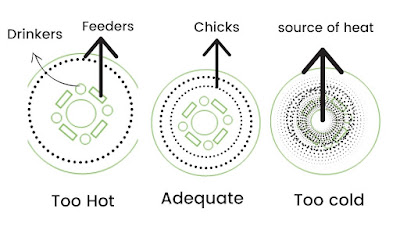
If chicks crowd tightly, move away from heat or gather on one side of the brooder, investigate the environment.
Use our Brooding Guide for the practical principles, then follow your layer breeder’s exact targets.
5. Body weight matters during rearing
Pullets should not simply “survive until laying age.” They need to reach the correct body weight with good uniformity.
Weigh a sample of birds regularly and compare with the breeder target for the strain.
Track:
- average body weight;
- uniformity;
- feed intake;
- mortality; and
- major health events.
Pullets that are too light at sexual maturity may struggle with egg size and production later.
6. Do not push pullets into lay too early
Lighting and body development work together.
If birds are stimulated into lay before they are properly developed, later performance can suffer.
Follow the breeder lighting programme rather than adding more hours of light simply because you want eggs earlier.
7. Housing system: choose what you can manage well
Layer farms may use floor systems, cage systems or other controlled housing arrangements.
The right choice depends on capital, welfare requirements, labour, climate, land, manure handling and market expectations.
Deep litter system
Birds live on a floor covered with suitable litter material.
This system needs:
- good ventilation;
- dry litter;
- enough feeder and drinker space;
- nest boxes;
- control of floor eggs; and
- good parasite and disease management.
Cage systems
Cage systems can simplify some aspects of feeding, egg collection and manure separation, but they also require careful design, ventilation, stocking control and welfare consideration.
Housing standards and legal requirements differ by country, so farmers should follow local rules and current production guidance.
Free range systems
Free range does not mean birds have no management.
They still need:
- shelter;
- feed;
- water;
- biosecurity;
- predator control;
- nesting areas; and
- health monitoring.
8. Feed according to the stage of production
Layer nutrition changes as birds move from chick to grower to laying stage.
Do not feed layers the same ration throughout life.
The diet should match:
- age;
- body weight;
- production stage;
- feed intake; and
- breeder recommendations.
Use our Poultry Nutrition Guide for the basic nutrient principles.
9. Water intake deserves daily attention
Layers can continue eating for a while even when water access is poor, but production can still fall quickly.
Check:
- tank level;
- water pressure;
- blocked nipples;
- leaks;
- water cleanliness;
- drinkers at the right height; and
- whether all birds can reach water.
Do not use one fixed water formula for every flock. Water intake changes with temperature, feed intake, production and bird age.
10. Lighting must be consistent
Lighting affects sexual maturity and egg production.
Problems can arise when:
- bulbs fail;
- timers change;
- power supply is inconsistent;
- light intensity changes suddenly; or
- birds receive the wrong programme for their age.
Use the breeder programme for the strain.
11. Prepare the laying house before first egg
Do not wait until birds begin laying before preparing the house.
Check:
- nest boxes;
- feeders;
- drinkers;
- lighting;
- ventilation;
- litter where used;
- egg collection area; and
- rodent and predator control.
Birds should enter the laying stage in a stable environment.
12. Change to layer feed at the right time
Do not switch to layer feed too early simply because birds are approaching laying age.
The timing should consider age, body weight, strain and breeder guidance.
Layer feed contains more calcium than grower feed because shell formation creates a much higher calcium demand.
13. Egg size depends on more than calcium
Small eggs can be influenced by:
- genetics;
- pullet body weight;
- age;
- feed intake;
- energy;
- amino acids;
- essential fatty acids;
- heat stress; and
- health.
Do not add calcium blindly when the real problem is small egg size.
Use our Egg Size Guide for a more detailed check.
14. Egg production should be recorded every day
Record:
- birds alive;
- eggs collected;
- cracked eggs;
- dirty eggs;
- feed used;
- mortality;
- water problems; and
- anything unusual.
Use the Egg Production Calculator to track production percentage.
15. When production drops, do not jump straight to medicine
If layers are eating but production is falling, check:
- water;
- feed changes;
- feed quality;
- heat;
- lighting;
- stress;
- flock age;
- shell changes; and
- disease signs.
Use our Layers Eating but Egg Production Dropping Guide.
16. Floor eggs need management
In floor systems, floor eggs can increase cracking, contamination and labour.
To reduce them:
- prepare nests before lay begins;
- keep nests clean and attractive;
- collect eggs regularly;
- avoid dark corners that attract laying;
- maintain correct lighting; and
- discourage birds from sleeping in nests.
17. Shell quality needs separate attention
Cracked and weak shelled eggs can come from nutrition, heat, age, disease, handling and nest problems.
Use our Egg Breakage and Shell Quality Guide when shell loss becomes a problem.
18. Biosecurity matters throughout the flock
Layer farms keep birds for a long time, so disease prevention has to be consistent.
Control:
- visitors;
- vehicles;
- new birds;
- equipment;
- rodents;
- wild birds;
- dead birds; and
- movement between poultry houses.
Use the Poultry Biosecurity in Nigeria Guide.
19. Vaccination should follow a real flock programme
Do not copy a medication or vaccination table blindly from the internet.
The correct programme depends on:
- local disease risk;
- hatchery vaccination;
- maternal immunity;
- vaccine availability;
- farm history; and
- veterinary guidance.
Keep vaccination records. Record the product, batch, date, method and person responsible.
20. Do not medicate healthy birds without a clear reason
Routine antibiotics should not be used as an egg production booster.
If disease is suspected, investigate the cause and use treatment for a clear veterinary reason.
For laying birds, always consider medicine withdrawal instructions because residues can affect eggs intended for food.
21. Heat stress can reduce feed intake and production
Watch for:
- panting;
- wings held away from the body;
- crowding around water;
- reduced afternoon feeding;
- thin shells; and
- production drops.
Use our Heat Stress in Poultry Guide.
22. Mortality should be recorded and investigated
Do not record only total deaths at the end of the month.
Record mortality every day and look for patterns.
Sudden increases, repeated respiratory signs, abnormal droppings or nervous signs need investigation.
23. Keep financial records too
Egg production is a business.
Record:
- feed cost;
- chick or pullet cost;
- labour;
- vaccines and veterinary expenses;
- electricity;
- transport;
- packaging;
- egg sales;
- spent hen sales; and
- other income or losses.
A flock can have good egg production and still make poor profit if costs are too high.

Common mistakes in layer farming
- Buying chicks before checking the egg market.
- Ignoring pullet body weight.
- Changing lighting without a breeder plan.
- Switching to layer feed too early.
- Adding calcium for every production problem.
- Ignoring water supply.
- Keeping no egg records.
- Using routine medication without diagnosis.
- Waiting until production drops badly before investigating.
- Focusing on egg numbers while ignoring cost per tray.
Simple layer farming checklist
- Market identified.
- Reliable chick source chosen.
- Brooder prepared.
- Body weight tracking planned.
- Feed programme ready.
- Water system reliable.
- Lighting programme available.
- Housing prepared for lay.
- Vaccination plan confirmed.
- Biosecurity plan active.
- Egg records ready.
- Financial records ready.
Bottom line
Layer farming is a long production cycle. Small mistakes during brooding and rearing can show up months later as poor egg production, small eggs, weak shells or uneven birds.
Build the flock properly from day one. Track body weight, feed, water, lighting, health and production. Then compare results with the breeder guide and your own farm records.
Do not manage layers by egg count alone. Manage the bird from chick to pullet to laying hen.