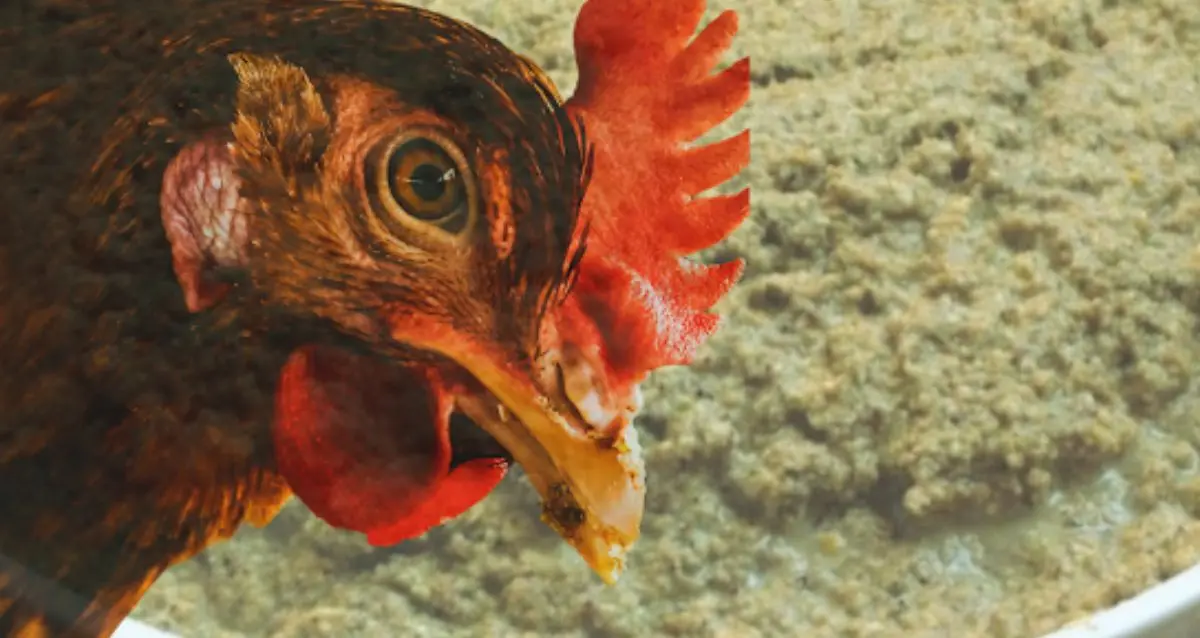
Sometimes spoiled poultry feed is easy to recognise. You open the bag and see mould, damp lumps, insects or caking. The feed may smell sour, musty or rancid.
But there is one important warning every poultry farmer should know:
Feed can look normal and still contain harmful mould toxins.
Your eyes and nose are useful for the first check. They are not a laboratory test.
What are the common signs that poultry feed has spoiled?
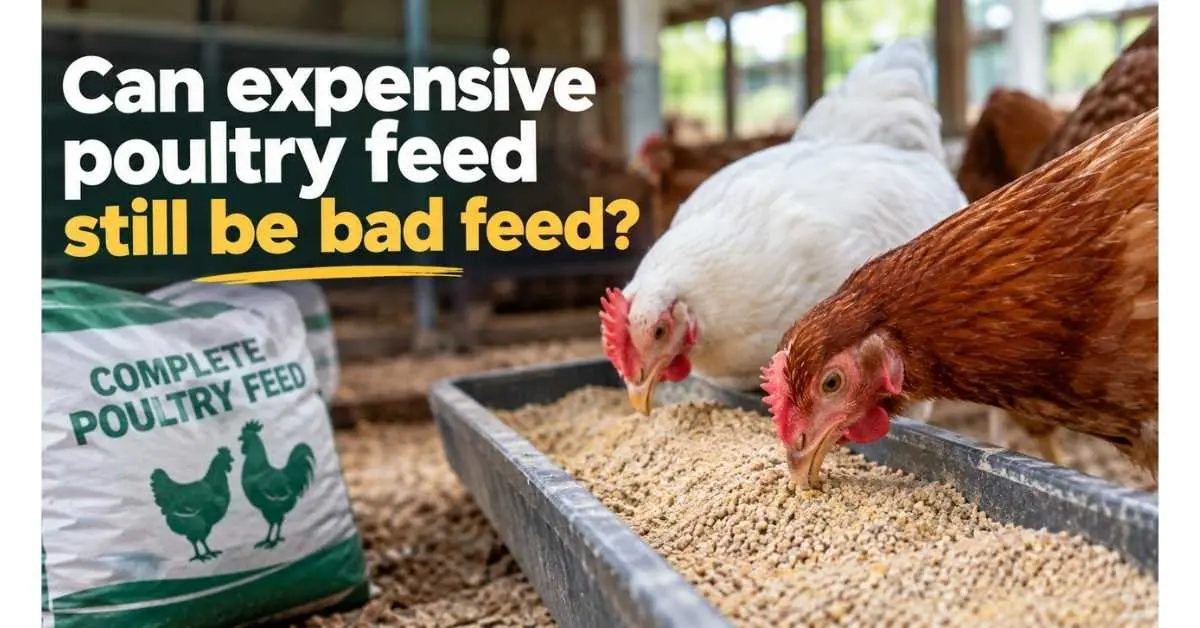
Check the feed before you pour it into the feeder. Look for visible mould, dampness, hard or unusual lumps, caking, insects, larvae or webbing, unusual colour, sour or rancid smell, damaged bags, rodent contamination and foreign material.
If spoilage is obvious, do not mix the suspicious feed into good feed simply because you do not want to lose money.
Why mouldy feed is serious
Mould can reduce feed quality, and some moulds can produce toxins called mycotoxins.
The danger is that a farmer may see a little mould and think, “It is only small. Let me mix it with good feed.” That can spread the problem across a larger quantity of feed.
Do not use mixing as a way to hide suspicious feed.
Nigerian research shows why this matters
A Nigerian study collected feed and feed ingredients from in house poultry mills across 12 states. Mycotoxins were common in the finished feed samples, and ingredients such as maize and groundnut cake were important contributors. Read the Nigerian multi state study.
An Oyo State study also found mycotoxin contamination in poultry feed and ingredients collected in both wet and dry seasons. See the Oyo State study.
No visible mould does not mean the feed is free from hidden toxins.
Can poultry feed spoil without smelling bad?
Yes. A normal smell is a good sign, but it cannot rule out every feed quality problem. Mycotoxins may be present without an obvious smell that a farmer can detect.
If a serious feed problem is suspected and birds are affected, testing may be more useful than guessing.
Maize and groundnut cake deserve careful storage
Maize and groundnut cake are common poultry feed ingredients in Nigeria. When drying and storage are poor, they can become vulnerable to mould and contamination.
This does not mean maize or groundnut cake is “bad.” It means the farmer should pay attention to moisture, source and storage.
Moisture is one of the biggest warning signs
Feed should not be stored directly on a damp floor or against a wet wall.
If a bag has absorbed water, do not simply spread the feed in the sun and assume everything is safe. Drying may reduce moisture, but it does not guarantee that any toxin already produced has disappeared.
Rainy season is not the only risky time
Wet season humidity can increase storage problems, but feed safety is an all year job. The Oyo State study found contamination in samples from both wet and dry periods.
So good storage should not stop when the rains stop.
What signs may appear in the birds?
Feed problems do not always produce one clear sign. Depending on the problem, you may notice poor growth, birds eating but not gaining enough weight, uneven flock size, reduced egg production, poor feed efficiency, reduced appetite, increased sickness or higher mortality.
But these signs can also come from heat, water problems, disease, parasites or management.
If broilers are eating but not growing, use our broiler growth troubleshooting guide.
If layers are eating but production is falling, use the Egg Production Calculator and our layer troubleshooting guide.
What should I do with suspicious poultry feed?
- Stop using the suspicious batch.
- Do not mix it into good feed.
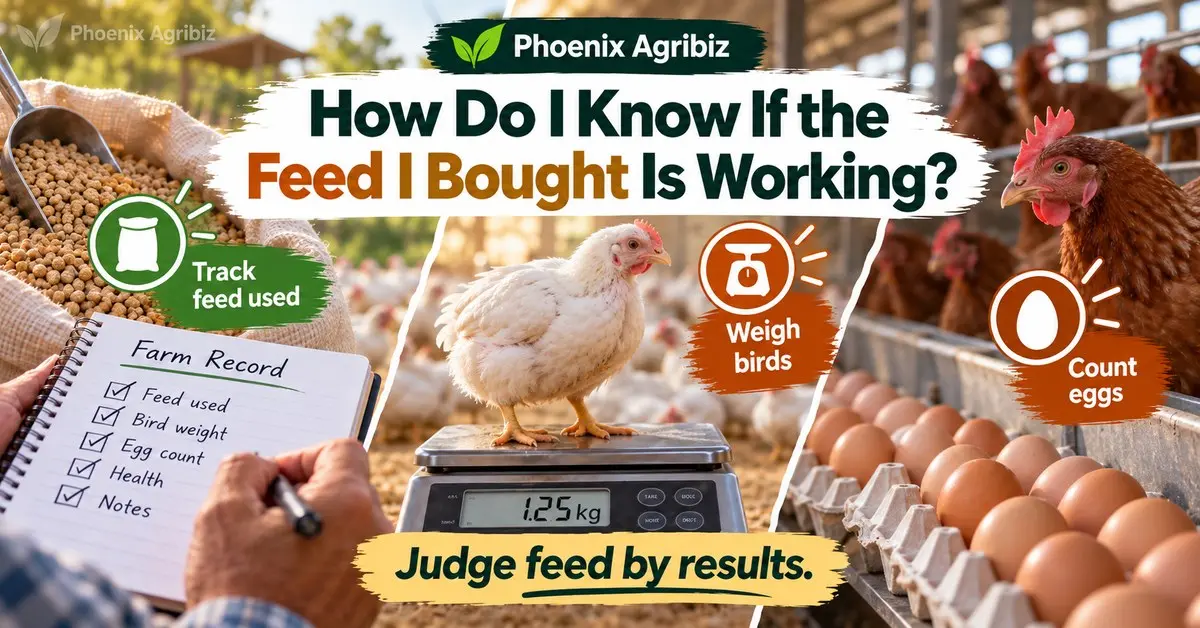
- Keep a representative sample.
- Keep the bag or batch information.
- Record the supplier and purchase date.
- Write down when the feed entered the feeders.
- Record bird performance and unusual signs.
- Contact the supplier or manufacturer where appropriate.
- If losses are serious, involve a veterinarian or laboratory.
How should poultry feed be stored?
Keep feed in a dry, clean store; off the bare floor, preferably on pallets; away from leaking roofs and walls; protected from rats and insects; away from chemicals and other contaminants; and arranged so older stock can be used before newer stock.
FAO recommends protecting feed and ingredients from moisture, pests and contamination during storage and handling. See FAO good feed industry practices.
Should I buy a large quantity because the price is cheap?
Only if you can store it properly and use it within a sensible period.
A bargain becomes a loss if bags stay too long in a hot, damp or pest infested store. For small farmers, buying more than the farm can safely store may create a feed quality problem that cancels the saving.
What if the supplier says the feed is fine?
Do not argue from emotion. Use records.
Keep the batch information, feed sample, photographs where useful and flock performance records. If a problem is serious, evidence is more useful than saying, “Since I bought this feed my birds are not doing well.”
What about feed cost?
Throwing away a suspicious batch hurts. But feeding clearly spoiled feed can cost more if growth drops, egg production falls or birds become sick.
Use the Feed Cost Calculator when comparing ration cost and the Poultry Profit Calculator when you want to see the full production effect.
A 30-second feed check before every new bag
- Look at the bag.
- Smell the feed.
- Feel for dampness or abnormal lumps.
- Check for insects or webbing.
- Confirm the feed type and stage.
- If something looks wrong, stop and investigate before feeding the flock.
See it. Smell it. Store it properly. Keep records. But do not assume your eyes and nose can detect every feed toxin.