
Fermented poultry feed gets a lot of attention because farmers hear claims such as “birds grow faster,” “layers lay more,” “feed cost drops,” or “you will no longer need antibiotics.”
Some research does show useful effects. But fermented feed is not a magic feed, and the result depends on what is fermented, how it is fermented, how much is used, bird type, hygiene and the rest of the ration.
Fermentation can improve a feed ingredient. It does not automatically turn a poor ration into a good ration.
What is fermented poultry feed?
Fermented feed is feed or a feed ingredient that has been changed by microorganisms such as beneficial bacteria or yeast under controlled conditions.
During fermentation, microorganisms can:
- produce organic acids;
- change some carbohydrates;
- reduce some anti nutritional factors;
- alter the microbial population of the feed; and
- in some cases improve nutrient availability.
But not every fermented product is the same. Fermented soybean meal, fermented complete feed and a bucket of wet feed left on the farm are not automatically equivalent.
What does research actually show?
A 2025 review of fermented feed in broilers found that many studies reported improvements in nutrient use, gut health, weight gain and feed conversion, but results were not identical across all studies or all ages.
A 2026 meta analysis of 24 controlled studies in laying hens found a small average improvement in laying rate, internal egg quality and eggshell thickness. However, the overall feed to egg ratio did not improve significantly, and results varied widely depending on the fermented feed and inclusion level.
See the 2025 broiler review and the 2026 laying hen meta analysis.
The practical meaning is simple: fermented feed can help in some systems, but the farmer should not expect the same result from every fermented feed.
Can fermented feed make broilers grow faster?
Sometimes it may improve growth or feed conversion, especially when fermentation improves digestibility or reduces anti nutritional factors.
But there is no honest rule such as “normal feed takes three weeks and fermented feed takes two weeks.” Growth still depends on genetics, total diet, feed intake, water, brooding, heat, health and management.
If broilers are not growing, use our Broilers Not Growing guide before assuming fermentation is the answer.
Can fermented feed increase egg production?
Research suggests it can improve laying rate in some diets.
But the effect is not guaranteed.
A farmer should still track:
- daily egg production;
- feed intake;
- egg weight;
- shell quality;
- mortality; and
- flock age.
If production is dropping, investigate the full flock problem rather than relying on fermented feed alone.
Can fermented feed increase egg size?
Do not present fermented feed as a guaranteed egg size treatment.
Egg size is affected by genetics, pullet body weight, flock age, feed intake, energy, amino acids, essential fatty acids, heat stress and health.
Some studies report changes in egg quality traits, but that does not mean every homemade fermented feed will make eggs larger.
See our How to Increase Egg Size in Layers guide.
Does fermented feed improve eggshell quality?
The 2026 laying hen meta analysis found a small average improvement in eggshell thickness across the studies it examined.
That is useful evidence, but the response varied.
For a farm with shell problems, still check calcium intake, phosphorus, vitamin D, heat stress, flock age, disease and handling.
Can fermented feed reduce feed cost?
Possibly, but only if the numbers work.
Fermentation itself takes labour, water, containers, time and careful hygiene. If birds perform better, the cost per kilogram of gain or cost per tray of eggs may improve. If performance does not improve, the extra work may add cost instead.
Do not judge savings by “bags used” alone.
Compare:
- cost of ingredients;
- labour;
- water;
- storage loss;
- feed intake;
- FCR or egg output; and
- mortality.
Can fermented feed replace antibiotics?
No fermented feed should be presented as a direct replacement for an antibiotic needed to treat a diagnosed bacterial disease.
Research is interested in fermented feed partly because improving gut health may reduce disease pressure and support lower antibiotic use in production systems.
That is different from saying fermented feed can treat an infection.
If birds are sick, investigate the disease.
The biggest risk: bad fermentation
Farmers should take this seriously.
Wet feed can spoil if the process is poorly controlled.
Possible warning signs include:
- mould growth;
- rotten or putrid smell;
- unusual colours;
- slimy deterioration;
- insect contamination; and
- containers contaminated by dirt, manure or old spoiled feed.
Do not feed a batch simply because “fermented feed normally smells sour.” If a batch looks or smells wrong, discard it rather than gamble with the flock.
Fermentation does not remove every feed hazard
Do not use fermentation as a way to rescue mouldy or spoiled ingredients.
Mycotoxins can already be present before visible mould becomes obvious, and fermentation is not a reliable farm method for making contaminated feed safe.
Use our Spoilt Poultry Feed guide if feed quality is in doubt.
Should I ferment complete commercial feed?
Be careful.
A complete commercial feed has already been formulated to a nutrient specification. Adding water and fermenting it changes how the feed is handled and may change intake, stability and hygiene.
If you want to test fermentation, start with a small controlled trial rather than changing the whole flock at once.
A farmer friendly way to test fermented feed
If you want to know whether it helps on your farm:
- Choose a small group of similar birds.
- Keep another similar group on the normal feed.
- Do not change several other things at the same time.
- Record feed used.
- Record weekly body weight or egg production.
- Record mortality and health problems.
- Compare the cost per result.
For broilers, compare FCR. For layers, compare feed per egg, egg production and egg quality.
What not to claim about fermented feed
- It does not guarantee faster growth.
- It does not guarantee bigger eggs.
- It does not guarantee lower feed cost.
- It does not cure bacterial disease.
- It does not make mouldy feed safe.
- It does not automatically increase protein by 50%.
Who may benefit most from fermented feed research?
Farmers and feed producers who have a clear ingredient problem to solve may benefit from properly controlled fermentation.
For example, research often looks at fermenting soybean meal or agricultural by products to improve digestibility or reduce anti nutritional factors.
That is different from fermenting any feed simply because it is available.
Bottom line
Fermented poultry feed is a real nutritional tool, not a miracle.
Research shows promising effects on gut health and production in some systems, but the size of the benefit varies.
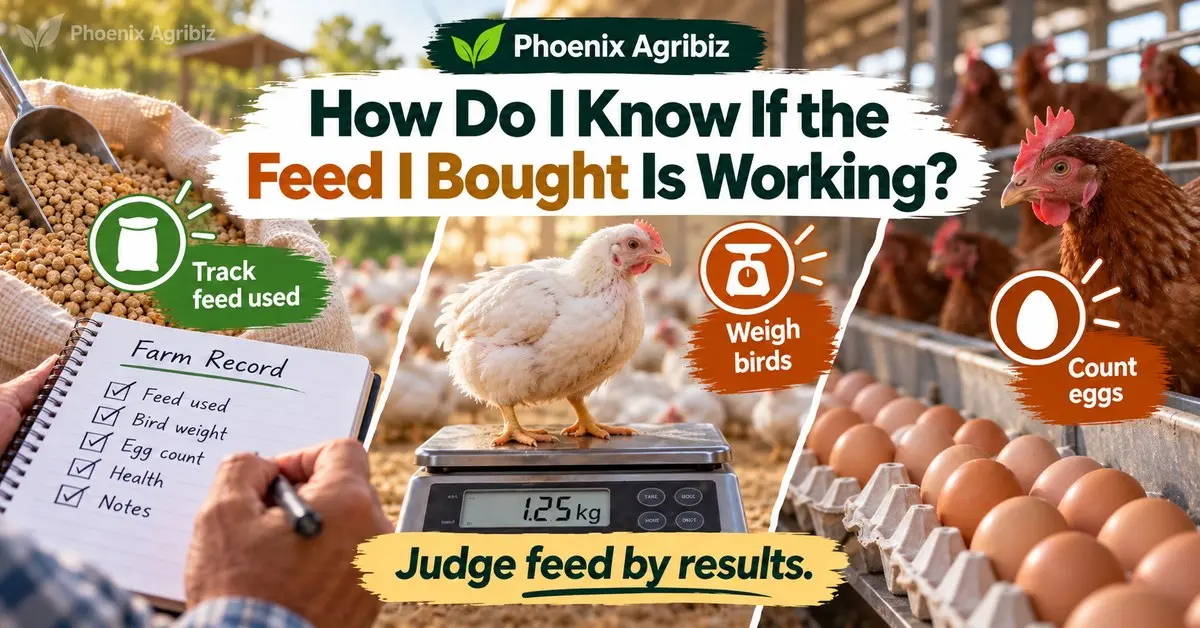
If you try fermented feed, judge it with records: not testimonials.
Measure feed intake, growth, egg output, mortality and cost. If the numbers do not improve, fermentation is not saving you money.