
A layer flock can look healthy as chicks and still disappoint later if the birds were fed for the wrong stage.
Chicks need feed for early growth. Pullets need feed that helps them reach the right body weight without becoming too fat. Laying hens need enough nutrients for eggs, shell quality and body maintenance.
Do not feed a laying hen like a chick, and do not feed a growing pullet like a laying hen.
Why layer nutrition changes with age
The bird is doing a different job at each stage.
- Chick stage: build the body, organs, bones and feathers.
- Pullet stage: grow steadily toward sexual maturity and the correct body weight.
- Layer stage: maintain the body while producing eggs and shells.
That is why one feed cannot serve the whole life of the bird.
For the wider basics of poultry feeding, see our Poultry Nutrition Guide.

The nutrients that matter at every stage
All stages need:
- water;
- energy;
- protein;
- amino acids;
- fat;
- minerals;
- vitamins; and
- the right amount of fibre for the diet.
The difference is the amount and balance required at each stage.
Water comes first
Water is not something to think about only during heat stress.
Poor water access can reduce feed intake, growth and egg production very quickly.
Check:
- tank level;
- blocked nipples;
- leaking drinkers;
- water pressure;
- drinkers at the right height;
- cleanliness; and
- whether all birds can reach water.
Do not restrict water to control feed intake.
Chick nutrition: build the bird first
Young layer chicks need a starter feed made for early growth.
The aim is not simply to make them heavy. The aim is to develop a healthy, even flock.
A good starter programme should support:
- early growth;
- bone development;
- feathering;
- organ development;
- strong appetite; and
- good flock uniformity.
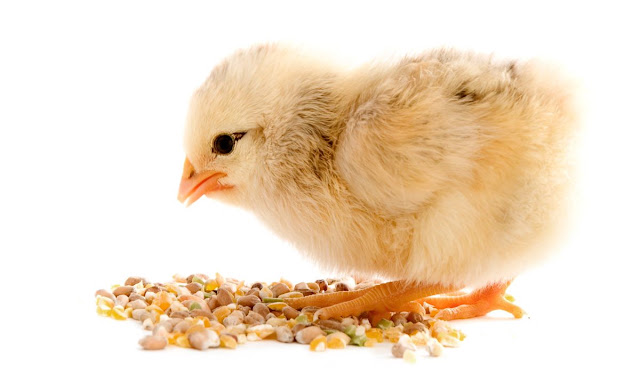
Do chicks need a very high protein feed?
Chicks need enough protein, but crude protein alone does not tell you whether the feed is right.
Amino acids such as lysine and methionine also matter.
A feed can show a good crude protein percentage and still be weak if the amino acid balance is poor.
That is why a proper chick starter should be formulated as a complete feed, not built around one number.
Do not feed grower or layer feed to young chicks
Young chicks should not be pushed onto a grower or layer feed too early just to save money.
The nutrient balance is different.
Layer feed in particular contains more calcium because laying hens need calcium for eggshells.
That high calcium level is not designed for very young growing birds.
When should chicks move to grower feed?
Do not use one universal age for every strain.
The correct time depends on:
- the breeder programme;
- body weight;
- flock uniformity;
- feed programme; and
- how the birds are developing.
Use the breeder guide for the strain you are raising.
If the flock is badly underweight, blindly changing feed because the calendar says so may not solve the problem.
Pullet nutrition: grow steadily, not excessively
The pullet stage is where many future egg problems begin.
Pullets should reach laying age with the correct body weight, good frame size and good flock uniformity.
The goal is not to make them as heavy as possible.
Overweight pullets can create problems later. Underweight pullets can also enter lay badly prepared.

What should grower feed do?
A good grower ration should help the pullet:
- reach target body weight;
- maintain good uniformity;
- develop bone and frame;
- avoid excess fat;
- prepare for sexual maturity; and
- remain healthy.
Grower feed is not meant to make pullets start laying early.
Weigh pullets regularly
Do not manage pullets by eye alone.
Take a sample and weigh them regularly.
Record:
- average body weight;
- how many birds are close to the target;
- feed intake;
- mortality;
- major disease events; and
- any feed changes.
Compare the results with the breeder guide for your strain.
Uniformity matters
A flock with the correct average body weight can still be poor if some birds are very heavy and others are very small.
Uneven flocks can enter lay unevenly.
If uniformity is poor, check:
- feeder space;
- water access;
- brooding history;
- crowding;
- disease;
- heat stress;
- feed quality; and
- whether smaller birds are being pushed away from feed.
When should pullets switch to layer feed?
Do not switch simply because the birds have reached one fixed age.
The decision should consider:
- age;
- body weight;
- sexual development;
- first egg signs;
- breeder guidance; and
- the feeding programme being used.
For the practical transition, see our How to Switch to a Layer Feed guide.
Layer nutrition: feed for eggs and body maintenance
Once birds are laying, the nutrient demand changes again.
The hen now needs nutrients for:
- egg formation;
- shell formation;
- body maintenance;
- feather condition;
- immune function; and
- continued production.

Calcium becomes more important in lay
Eggshell formation needs a lot of calcium.
But more calcium is not automatically better.
Shell quality also depends on:
- feed intake;
- vitamin D;
- phosphorus balance;
- particle size of calcium source;
- age;
- heat stress;
- disease; and
- egg size.
If shells are weak, do not add calcium blindly before checking the whole system.
Use our Egg Breakage and Shell Quality Guide for troubleshooting.
Protein and amino acids still matter in layers
Layers need enough protein, but amino acid balance is very important for egg output and egg size.
Methionine, lysine and other essential amino acids need to be considered together with energy and feed intake.
If birds eat less because of heat, they also consume less protein and amino acids.
Energy and feed intake work together
Birds often adjust feed intake according to the energy level of the ration and the environment.
Heat can reduce intake.
That means a ration that works well in one condition may not perform the same way when birds are eating less.
This is one reason tropical feeding needs close observation rather than copying a fixed formula.
Do not use one fixed nutrient table for every layer strain
Layer strains do not all have identical nutrient requirements.
Requirements also change with:
- age;
- body weight;
- egg mass;
- feed intake;
- temperature;
- housing;
- production level; and
- breeder programme.
Reference values are useful, but they should not be treated as universal numbers for every flock.
Use the current breeder guide or a qualified poultry nutritionist when precise formulation is needed.
What should farmers check on the feed label?
For commercial feed, check:
- bird type;
- production stage;
- manufacturer;
- batch details;
- manufacture date;
- storage instructions;
- nutrient declaration where provided; and
- whether the feed contains any medication or special additive.
Do not buy by bag colour alone.
Feed ingredients still matter
A correct formula can fail if ingredient quality is poor.
Watch for:
- mouldy maize;
- poor soybean processing;
- sandy groundnut cake;
- high fibre offal;
- rancid oils;
- poor premix storage; and
- adulteration.
Use our Livestock Feed Ingredients Guide for the practical checks.
Feed changes should not be made carelessly
If you are changing from one complete feed to another, avoid creating unnecessary stress.
A short gradual transition may help birds adjust, especially when the feed form, ingredients or taste changes.
But do not follow one rigid mixing schedule for every flock.
Follow the feed manufacturer or breeder guidance where available, and watch actual feed intake and droppings.
Do not add random supplements to a complete ration
If birds are already eating a properly balanced complete feed, adding extra protein, vitamins, calcium or amino acids without a reason can upset the balance and waste money.
Use supplements only when there is a clear need.
How do you know if the ration is working?
Watch performance, not advertising.
For chicks and pullets, track:
- body weight;
- uniformity;
- feed intake;
- mortality;
- feathering; and
- general activity.
For laying hens, track:
- egg production;
- egg size;
- shell quality;
- feed intake;
- body weight;
- mortality; and
- broken or dirty eggs.
If egg production drops, check more than feed
Feed is important, but production can also fall because of:
- water problems;
- heat;
- lighting changes;
- disease;
- stress;
- age; and
- poor body weight entering lay.
Use our Layers Eating but Egg Production Dropping Guide for a full check.
Water needs change with heat and production
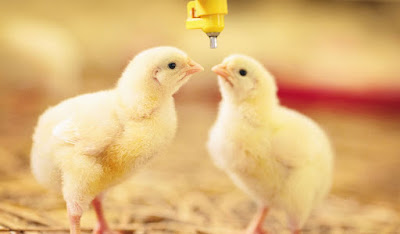
There is no one water intake number for every flock.
Water use changes with:
- temperature;
- feed intake;
- salt level;
- age;
- egg production; and
- water system.
Watch the flock and the water system every day.
Common feeding mistakes in layer production
- Keeping chicks too long on starter without checking breeder guidance.
- Moving pullets to layer feed too early.
- Using layer feed to push underweight pullets into lay.
- Adding extra calcium for every egg problem.
- Judging feed only by crude protein.
- Ignoring body weight and uniformity.
- Changing feed because another farmer changed theirs.
- Using poor quality ingredients to save money.
- Ignoring water.
- Keeping no records.
Simple stage by stage checklist
Chicks
- Correct starter feed.
- Easy feed and water access.
- Good brooding.
- Body weight tracked.
- Uniformity watched.
Pullets
- Grower feed matched to breeder programme.
- Body weight checked regularly.
- Uniformity monitored.
- Birds not pushed into lay too early.
- Feed changes based on development, not age alone.
Layers
- Correct layer feed.
- Water always available.
- Egg production recorded.
- Egg size and shell quality monitored.
- Feed intake and body weight checked.
Bottom line
Good layer nutrition is a journey from chick to pullet to laying hen.
The bird’s nutrient needs change as its job changes.
Use the breeder guide, measure body weight, watch feed intake and keep production records.
Do not feed by age alone. Feed according to stage, body development and actual flock performance.