If your chickens are pecking one another, pulling feathers or drawing blood, do not wait for it to “sort itself out.” A few quick pecks can be normal flock behaviour, but repeated feather pulling, chasing, wounds and vent pecking can turn into chicken cannibalism very quickly.
When harmful pecking occurs on a farm, start with this question: what is putting pressure on this flock? Heat, crowding, competition for feed or water, bright light, wet or bare litter, a wound, a prolapse, parasites, sudden flock changes or poor nutrition can all push birds towards harmful pecking.
This guide will show you how to stop chickens from pecking each other, how to find the real cause, and how to keep the problem from returning. If your birds are also panting, growing unevenly, huddling or showing other management related signs, start with our Common Chicken Problems guide.
First: Is It Normal Pecking Order or a Real Problem?
Chickens naturally establish a pecking order. You may see one bird give another a short peck, the lower ranking bird moves away, and both go back to feeding or resting. That is not the same thing as a bird being chased around the pen, kept away from feed, stripped of feathers or left bleeding.
Be concerned when you see:
- the same bird being chased repeatedly;
- feathers being pulled out rather than lightly pecked;
- bare patches on the back, tail, neck or around the vent;
- blood, broken skin or open wounds;
- a bird hiding in a corner or refusing to approach feed and water;
- birds pecking at the vent of a laying hen;
- several birds joining in once one bird is injured.
That last point matters. Once skin is broken and blood is visible, other birds may be attracted to the area and the situation can escalate. The Merck Veterinary Manual describes cannibalism as the severe end of feather or vent pecking and notes that several factors can contribute at the same time.
If There Is Blood, Do These Things First
Before you start looking for the original cause, stop the immediate damage.
- Remove the badly injured bird. Put it somewhere safe with easy access to feed and water so the flock cannot continue pecking the wound.
- Look for the main aggressor, but do not stop your investigation there. One bird may be doing most of the pecking, but the whole flock may still be under heat, crowding or feeding pressure.
- Check heat and airflow immediately. Hot, restless birds often become more irritable. If the pen is hot, use the steps in our Heat Stress in Poultry guide.
- Open up access to feed and water. Make sure every feeder and drinker is working and that smaller birds are not being pushed away.
- Reduce harsh light if the house is excessively bright. Do not plunge birds into darkness. The aim is to remove unnecessary stimulation while still allowing them to eat, drink and move normally.
Penn State Extension also recommends acting early because outbreaks become harder to control once the behaviour is established.
Why Are My Chickens Pecking Each Other?
There is rarely one single answer. Walk through these causes one by one and compare them with what is happening in your own pen.
1. Overcrowding and Competition
If too many birds are sharing too little space, everything becomes a contest: feeder space, drinker access, resting area and cooler spots in the house. The weaker birds lose first.
Do not judge crowding only by the number of birds per square metre. Watch the flock. Are birds piling around one drinker? Is one feeder always packed? Are smaller birds hanging back? Are birds unable to move away from an aggressive pen mate?
For broilers, check our floor space requirements guide and then adjust for bird size, weather, ventilation and equipment layout.
2. Heat Stress
In Nigeria and many other African production environments, heat can be a major background trigger. Birds that are panting, restless and competing for cool areas or water are already under pressure before pecking begins.
A Nigerian study of commercial poultry farms in Oyo State reported behavioural problems including vent pecking, feather pecking and aggressive pecking, alongside heat stress as a major management challenge. That study was published in 2015, so it should be treated as historical local evidence, not as a current national prevalence figure. You can read the study in the Sokoto Journal of Veterinary Sciences.
3. Too Little Feed, Water or Feeding Space
A flock can have feed in the house and still have a feeding problem. If only the biggest birds can reach it comfortably, the smaller birds are under pressure. The same applies to water.
Check whether feed is reaching all pans or troughs, whether drinkers are working, and whether there are enough usable feeding points. A sudden interruption in water supply can create intense crowding when water returns.
Also avoid “treating” pecking by throwing random salt, protein or supplements into the ration. Nutritional imbalance can contribute to feather pecking, but the correct response is to check whether the ration is appropriate for the age and production class of the birds, and whether they are actually consuming enough of it.
4. Excessive or Sudden Changes in Light
Very bright light can increase bird activity and make wounds more visible. Sudden changes in lighting can also disturb the flock.
Manage light according to the production stage and breed programme rather than using darkness as a cure. If the problem started after a bulb change, power restoration or change in lighting schedule, that timing is a useful clue.
5. No Good Litter or Nothing to Peck Except Other Birds
Chickens are built to peck and forage. If the floor is bare, badly caked or unsuitable for normal scratching and pecking, some of that behaviour may be redirected towards flock mates.
Keep litter dry and friable enough for birds to work through it. Where practical, provide safe enrichment that keeps birds occupied without contaminating the feed or litter. Current welfare research also recognises lack of suitable foraging opportunity as an important risk factor for injurious feather pecking.
If your floor is wet, caked or smelling strongly of ammonia, fix that problem too. Our Poultry Litter Management guide explains what to check.
6. Wounds, Skin Irritation, Parasites or a Sick Bird
Sometimes the flock starts pecking because one bird already has a problem. A wound, dirty vent, damaged feathering, external parasites or skin irritation can make a particular spot attractive to other birds.
Look closely at the bird being targeted. Is there a cut? A swollen vent? Missing feathers? Mites or lice? Diarrhoea stuck around the vent? Is the bird weak or behaving differently from the rest?
If the bird looks generally unwell rather than simply injured, use our Signs of a Sick Chicken guide and get veterinary help when needed.
7. New Birds or Sudden Flock Changes
Mixing unfamiliar birds can disturb the social order. So can moving birds to another pen, changing equipment, changing feed abruptly or creating a sudden disturbance in the house.
Some pecking may occur while birds re establish their hierarchy, but repeated chasing, injury and loss of feed or water access are not something to dismiss as “normal pecking order.”
8. Vent Pecking and Prolapse in Layers
Layers need special attention around the vent. After an egg is laid, the vent area may briefly be more exposed. A prolapse or damaged tissue can attract pecking and quickly become an emergency.
The Merck Veterinary Manual guidance on oviduct prolapse explains why exposed reproductive tissue can lead to severe vent pecking and cannibalism.
If you see protruding tissue, bleeding around the vent or birds actively attacking the vent of a layer, isolate the affected bird and seek qualified veterinary help. Do not treat that as an ordinary behavioural problem.
How to Stop Chicken Cannibalism Step by Step
Once you have stopped the immediate attack, work through the pen in this order.
Step 1: Find Out Whether the Problem Is Local or Flock Wide
Is one bird attacking one victim, or are several birds pecking several birds? Is it happening around one feeder, one drinker, one nest area or all over the house?
The pattern tells you where to look. Pecking around one feeder points towards competition. Pecking during the hottest hours points towards heat and crowding. Vent pecking in layers sends you towards nest, lighting, body condition and reproductive problems.
Step 2: Remove the Pressure on Feed and Water
Count the feeders and drinkers that are actually working. Refill, repair or redistribute them. Watch the smallest birds and make sure they can eat and drink without being driven away.
Step 3: Correct Heat, Space and Ventilation Problems
Do not wait for birds to collapse before dealing with heat. Improve safe airflow, provide reliable water and reduce unnecessary disturbance during the hottest period. If stocking pressure is obvious, create more usable space where possible.
Step 4: Give Birds a Better Place to Direct Pecking Behaviour
Dry litter, scratching material and appropriate enrichment can help birds spend more time on normal exploratory behaviour instead of flock mates. This is not magic; it works best when you also fix crowding, heat and feed access.
Step 5: Inspect the Victims Carefully
Look for parasites, wounds, dirty vents, prolapse, abnormal droppings and signs of illness. Treat the underlying health problem with qualified advice where necessary.
Step 6: Recheck the Flock After You Make Changes
Do not make a change and walk away. Return and observe quietly. Are the same birds still being chased? Can smaller birds now reach feed and water? Are birds calmer? Are new wounds appearing?
If pecking continues after the obvious management problems are corrected, the next step is not guesswork. Bring in a veterinarian, poultry consultant or other qualified animal health professional to help identify what you are missing.
What Not to Do When Chickens Are Pecking Each Other
- Do not assume every case is simply “pecking order.” Normal hierarchy should not leave birds bleeding or unable to eat.
- Do not leave a bleeding bird in the flock. That can allow the outbreak to escalate.
- Do not throw random salt, protein, vitamins or drugs into the feed. Correct the ration only after identifying a real feeding or nutritional problem.
- Do not rely only on sprays or coloured wound products. They may help protect a wound in some situations, but they do not correct heat, crowding, lighting or competition.
- Do not make beak trimming your first response. Beak treatment may reduce the damage birds can inflict, but it does not remove the reason the flock started pecking. Read our separate Beak Trimming in Poultry guide for the welfare issues, risks and safer decision making around that practice.
Broilers and Layers: I Do Not Check Them in Exactly the Same Order
With broilers, pay close attention to heat, stocking pressure, feeder and drinker access, uneven growth, litter condition and any bird that is weak or injured.
With layers, check those things, and examine the vent, nest area, body condition, lighting programme, onset of lay and possible prolapse much earlier in the investigation.
That difference matters because vent pecking can become serious before a farmer thinks of it as “cannibalism.”
How to Prevent Chickens from Pecking Each Other
A good prevention routine is not complicated. It is mostly about noticing pressure before the birds express it through injury.
- Walk the house every day and watch bird distribution before disturbing the flock.
- Keep water reliable and check every drinker line or drinker point.
- Give birds enough usable feeder space.
- Control heat and maintain safe ventilation.
- Keep litter dry, loose and suitable for scratching.
- Avoid abrupt changes in feed, light and flock composition where possible.
- Remove dead birds promptly.
- Separate badly injured birds before the flock worsens the wound.
- Watch layers for vent injury or prolapse.
- Keep records of mortality, injuries, feed use, water interruptions and major management changes.
That approach agrees with both the Nigerian field evidence on management related behavioural problems and current veterinary and extension guidance, which repeatedly point back to stocking pressure, feed and water access, heat, lighting, nutrition, injuries and the birds’ environment rather than one universal cause. Merck and Penn State Extension are useful references if you want to read the technical guidance behind these recommendations.
When Should You Get Veterinary Help?
Get qualified help promptly when:
- there are deep wounds or heavy bleeding;
- you see a prolapsed vent or reproductive tissue;
- mortality is increasing;
- several birds are weak or sick as well as being pecked;
- you suspect an external parasite problem but cannot identify it;
- the outbreak continues despite correcting space, heat, feed, water, lighting and litter problems;
- the same problem keeps returning in successive flocks.
Frequently Asked Questions
Can chickens kill each other by pecking?
Yes. Severe feather pecking and vent pecking can progress to cannibalism, serious injury and death. That is why blood and open wounds should be treated as an immediate management problem.
Will giving more protein stop chickens from pecking?
Not automatically. A poorly balanced ration can contribute to the problem, but blindly adding protein will not fix overcrowding, heat, a water shortage, excessive light or a wounded bird. Check the whole flock and the ration rather than guessing.
Should I separate the bully or the injured chicken?
If a bird is bleeding or badly injured, separate the injured bird immediately for protection. If one bird is clearly responsible for repeated attacks, temporary separation of the aggressor may also help while you correct the underlying flock problem.
Is beak trimming the best way to stop cannibalism?
No. It may reduce injury in some production systems, but it should not be used as a substitute for correcting the cause of feather or vent pecking. Treat it as a separate welfare and management decision.
Why do chickens suddenly start pecking each other?
Look for what changed: heat, water supply, feeder access, lighting, stocking pressure, new birds, feed, litter condition, disease, wounds or the start of laying. The timing of the outbreak is often your best clue.
Bottom Line
If your chickens are pecking each other, do not search for one magic cure. Protect injured birds first, then find the pressure that started the behaviour. Check space, heat, feed, water, light, litter, wounds, flock changes and: especially in layers: the vent.
When you correct the cause early, you have a much better chance of stopping feather pecking before it becomes full chicken cannibalism. And if the flock is still injuring birds after the obvious problems are corrected, bring in qualified veterinary or poultry health help rather than trying one remedy after another.
Veterinary disclaimer: This guide provides general poultry management and animal health information. It does not replace flock examination, diagnosis or treatment by a qualified veterinarian or animal health professional.
Related Posts

What Is Your Chicken Poo Telling You? Colours, Gut Health & Warning Signs
Infectious Bronchitis in Chickens: Coughing, Egg Drop, Diagnosis and What Farmers Should Do
Infectious Coryza in Chickens: Swollen Face, Runny Nose, Diagnosis and What Farmers Should Do
Why Are My Chickens Panting, Pecking, Growing Slowly or Dying?
Newcastle Disease in Chickens: Signs, What Farmers Should Do, Diagnosis and Prevention
Chicks Gasping and Dying? Aspergillosis (Brooder Pneumonia), Mould Risk and What Farmers Should Do
Respiratory Diseases in Chickens: Symptoms, Causes, Diagnosis and What Farmers Should Do
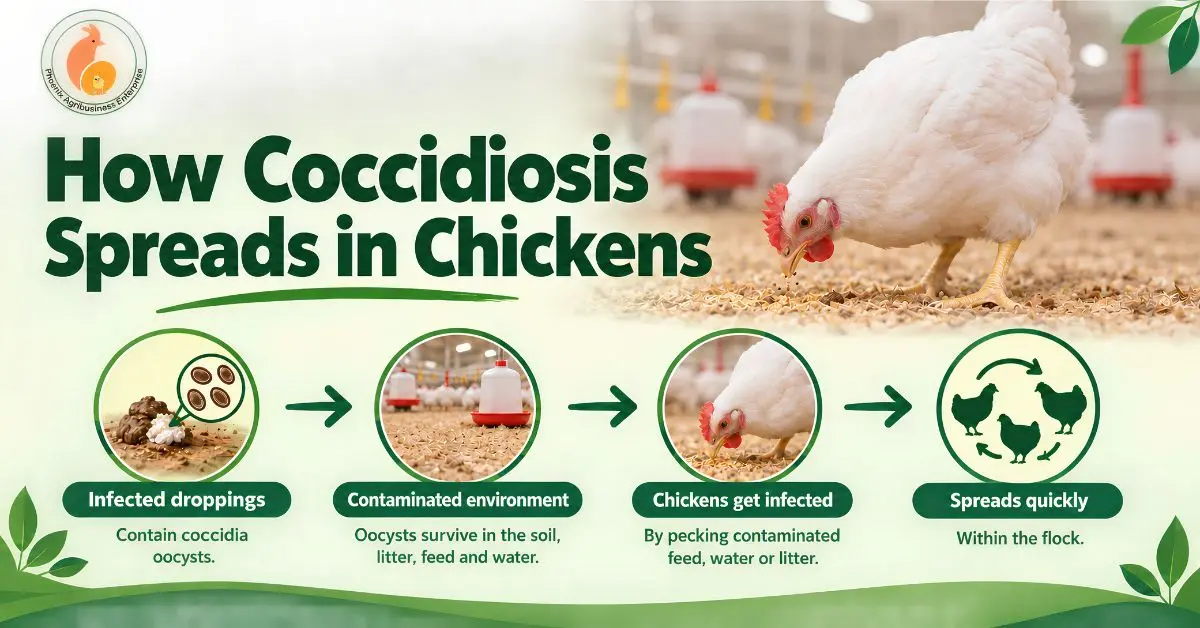
How Coccidiosis Spreads in Chickens: Understanding the Eimeria Lifecycle