A-Z List of Animal Names from Around the World
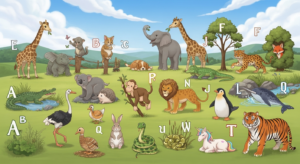
Welcome to a fun journey through the animal kingdom! In this guide, you will find a big list of animal names. This is a good way to learn new words and see how many different kinds of animals, like those with strong legs, are in the world. We have put together an A-Z list for you. It has animal names that are common and some that are very rare. Whether you’re a student, a parent, or someone who loves nature, this list will help you learn about the animals on our planet and learn new words.
Names of Animals in the World
| Aardvark | Arctic Hare | Bearded Dragon |
| Abyssinian | Armadillo | Beetle |
| African Clawed Frog | Asian Elephant | Binturong |
| African Palm Civet | Asian Giant Hornet | Bison |
| African Penguin | Australian Mist | Black Bear |
| African Wild Dog | Australian Shepherd | Black Russian Terrier |
| Ainu Dog | Avocet | Bloodhound |
| Akita | Aye Aye | Blue Lacy Dog |
| Alaskan Malamute | Baboon | Blue tick Coonhound |
| Albatross | Balinese | Bonobo |
| Alpine Dachsbracke | Bandicoot | Bongo |
| American Bulldog | Barnacle | Booby |
| American Eskimo Dog | Basenji Dog | Bornean Orangutan |
| American Foxhound | Basking Shark | Boston Terrier |
| Angelfish | Basset Hound | Brazilian Terrier |
| Antelope | Bavarian Mountain Hound | Brown Bear |
| Appenzeller Dog | Bat | Buffalo |
| Bulldog | Common Buzzard | Dugong |
| Bull Mastiff | Common Loon | Dormouse |
| Caiman Lizard | Common Toad | Duck |
| Cairn Terrier | Cow | Dusky Dolphin |
| Camel | Coyote | Cockroach |
| Capybara | Crab | Collared Peccary |
| Catfish | Crab-Eating Macaque | Eagle |
| Cavalier King Charles Spaniel | Crane | Earwig |
| Cesky Fousek | Crocodile | Eastern Lowland Gorilla |
| Chameleon | Cross River Gorilla | Egyptian Mau |
| Cheetah | Dachshund | Elephant Seal |
| Chihuahua | Deutsche Bracke | Emperor Penguin |
| Chimpanzee | Dhole | Emperor Tamarin |
| Chow Chow | Dogo Argentino | Emu |
| Clouded Leopard | Dolphin | Eastern Gorilla |
| Entlebucher | Geoffroys Tamarin | Edible Frog |
| Eskimo Dog | Giant Panda Bear | Hammerhead Shark |
| Ferret | Gibbon | Hamster |
| Field Spaniel | Gila Monster | Hedgehog |
| Finnish Spitz | Giraffe | Hercules Beetle |
| Fish | Glow Worm | Honey Bee |
| Flat Coat Retriever | Golden Lion Tamarin | Horned Frog |
| Flounder | Golden Oriole | Horse |
| Fly | Grasshopper | Howler Monkey |
| Fox | Great White Shark | Human |
| Fox Terrier | Grey Mouse Lemur | Humboldt Penguin |
| Frilled Lizard | Greyhound | Hyena |
| Fur Seal | Grey Seal | Ibis |
| Galapagos Penguin | Grizzly Bear | Indian Rhinoceros |
| Gerbil | Grouse | Indian Star Tortoise |
| German Pinscher | Guinea Pig | Indochinese Tiger |
| German Shepherd | Guppy | Indri |
| Irish Setter | Leaf-Tailed Gecko | Monitor Lizard |
| Iguana | Leopard Cat | Monkey |
| Jackal | Lemur | Mongoose |
| Jaguar | Liger | Mongrel |
| Japanese Chin | Lobster | Monte Iberia Eleuth |
| Javanese | Long-Eared Owl | Moose |
| Javan Rhinoceros | Magellanic Penguin | Mountain Dog |
| Jellyfish | Maine Coon | Mouse |
| Kakapo | Malayan Tiger | Numbat |
| Keel Billed Toucan | Manatee | Nurse Shark |
| Kiwi | Manta Ray | Octopus |
| Kingfisher | Masked Palm Civet | Okapi |
| Komodo Dragon | Mastiff | Old English Sheepdog |
| Kudu | Mayfly | Olm |
| Labradoodle | Meerkat | Opossum |
| Labrador Retriever | Minke Whale | Orangutan |
| Ladybird | Mole | Pademelon |
| Panther | Rabbit | Sea Urchin |
| Parrot | Radiated Tortoise | Seahorse |
| Patas Monkey | Rat | Serval |
| Peacock | Rattlesnake | Scorpion |
| Platypus | Red Knee Tarantula | Scorpion Fish |
| Pond Skater | Red Wolf | Sheep |
| Possum | River Turtle | Shih Tzu |
| Prawn | Rock Hyrax | Siamese |
| Proboscis Monkey | Royal Penguin | Siberian Husky |
| Pug | Russian Blue | Silver Dollar |
| Puma | Sand Lizard | Skunk |
| Purple Emperor | Saola | Sloth |
| Puss Moth | Norfolk Terrier | Slow Worm |
| Pygmy Hippopotamus | Sabre-Toothed Tiger | Snapping Turtle |
| Quail | Seal | Somali |
| Raccoon | Sea Dragon | Spadefoot Toad |
| Raccoon Dog | Sea Turtle | Sparrow |
| Sponge | Tiger Shark | Woodpecker |
| Squirrel | Toucan | Woolly Mammoth |
| Sri Lankan Elephant | Tree Frog | Wrasse |
| Staffordshire Bull Terrier | Tuatara | Yak |
| Starfish | Uakari | Yellow-Eyed Penguin |
| Stellers Sea Cow | Vervet Monkey | Yorkshire Terrier |
| Stick Insect | Vulture | Koala |
| Striped Rocket Frog | Wallaby | Mountain Gorilla |
| Sun Bear | Walrus | Beagle |
| Tang | Water Buffalo | Beagle |
| Tapanuli Orangutan | Water Dragon | Fin Whale |
| Tarsier | Weasel | Crested Penguin |
| Tawny Owl | Western Gorilla | Wolverine |
| Termite | Whale Shark | Galapagos Tortoise |
| Tiffany | Whippet | Cougar |
| Tiger Salamander | Wildebeest | Marine Toad |
| Piranha Shrimp | Wild Boar | Marine Toad |
Please note that this is not an exhaustive list, and there are many more fascinating animals in the world.

The world has millions of animal species, and each of them has its own name. In this A-Z list, you will see many wild animal names. These animals can be found in places like North America, South America, Africa, Asia, and Australia.
You will see the strong mountain lion, the small ant, and the aardvark, known for digging its burrows. Every animal name has something special to say. So, let us look at some of the most interesting wild animal names, along with facts, from around the globe.
Unique and Unusual Animal Names
1. African Elephant
The African elephant is one of the best-known large mammals in the world, often seen on safari. You can find them across the wide savannas of Africa. They stand out because of their huge size, big ears, and long trunks. The tooth of an African elephant can be as heavy as a small bowling ball.
I can’t share pictures here, but the African elephant is a famous animal. You can easily find its pictures online by searching for its name. Other popular animals include the lion, tiger, panda, kangaroo, and giraffe. They can also be easily found by searching their names for pictures.
There are many lists, like the Catalogue of Life and the IUCN Red List, that offer detailed information about animal species around the world.These animals live and travel in a group of animals led by an older female, called a matriarch. They talk with each other using many different sounds. Some of these sounds are too low for people to hear.
Globally, there are thousands of animal names, reflecting the vast diversity of species found on Earth. There are many lists, like the Catalogue of Life and the IUCN Red List, that offer detailed information about animal species around the world.
African elephants live in many places in southern Africa and even in other areas. They eat only plants, which helps improve their home for other animals, just like sloths help their ecosystems. They clear out trees, and this makes new grasslands for other mammals who live on the savannas of Africa.
2. Bengal Tiger
The Bengal tiger is a strong animal that lives in South Asia. Most of these tigers are in India. They are known for their bright orange fur. You can also see dark stripes on their coats. These stripes are special for each tiger, just like how people have different fingerprints. They are similar to the unique patterns found in jaguars.
But now, the Bengal tiger is an endangered species. People hunt them, and they are losing the land they live on. These are the main reasons there are not many left in the wild, unlike the fastest land animal, the cheetah. Some groups want to help save these tigers in India and other parts of Asia.
Bengal tigers like to live alone. They hunt mostly at dawn and dusk. Their food is usually deer, wild boar, and other big animals found in Southeast Asia. They play an important part in the food chain of their ecosystem.
3. Blue Whale
The blue whale is the largest animal in the world, arguably as impressive as the narwhal. This huge sea mammal can be as long as three buses and weigh more than three elephants put together. Its heart is the size of a small car.
Even though it is a giant, the blue whale eats mostly tiny krill. You can find this large mammal in every ocean, from cold polar waters to warm tropical seas.
Blue whales are an endangered species, like many other large mammals that live in the sea, including killer whales. In the past, people hunted them, and they almost went away for good. Their numbers have gone up a little, but they are still in danger from ships and also when they get caught in fishing nets.
4. Emperor Penguin
Emperor penguins are the tallest and heaviest among all penguins. They live in Antarctica, where it is very cold and windy. These birds have ways to deal with harsh weather. The temperature there can get very low.
To keep warm, emperor penguins come together in a tight group of animals called a huddle. This helps them share body heat and keep safe from the strong wind.
When it is breeding season, the male penguin looks after the one egg. He holds the egg on his feet for more than two months. During this time, he does not eat as he waits for the female to bring back food from the sea.
5. Giant Panda
The giant panda is one of the most loved and easy-to-spot large mammals, like the moose, in the world. This panda lives in the hills of central China. People know it for its black and white fur and calm way.
The giant panda has a diet made almost entirely of bamboo. An adult panda will eat for up to 12 hours each day. It will need to eat somewhere between 12 and 38 kilograms of bamboo every day just to meet its own needs.
The giant panda used to be listed as an endangered species. The efforts to save these mammals have helped the number of pandas grow, but there is still a problem. The giant panda and the gorilla are still at risk because they are losing the places they live in the wild. This is a big worry because the loss could take away both their food and their chance to live well in nature in China.
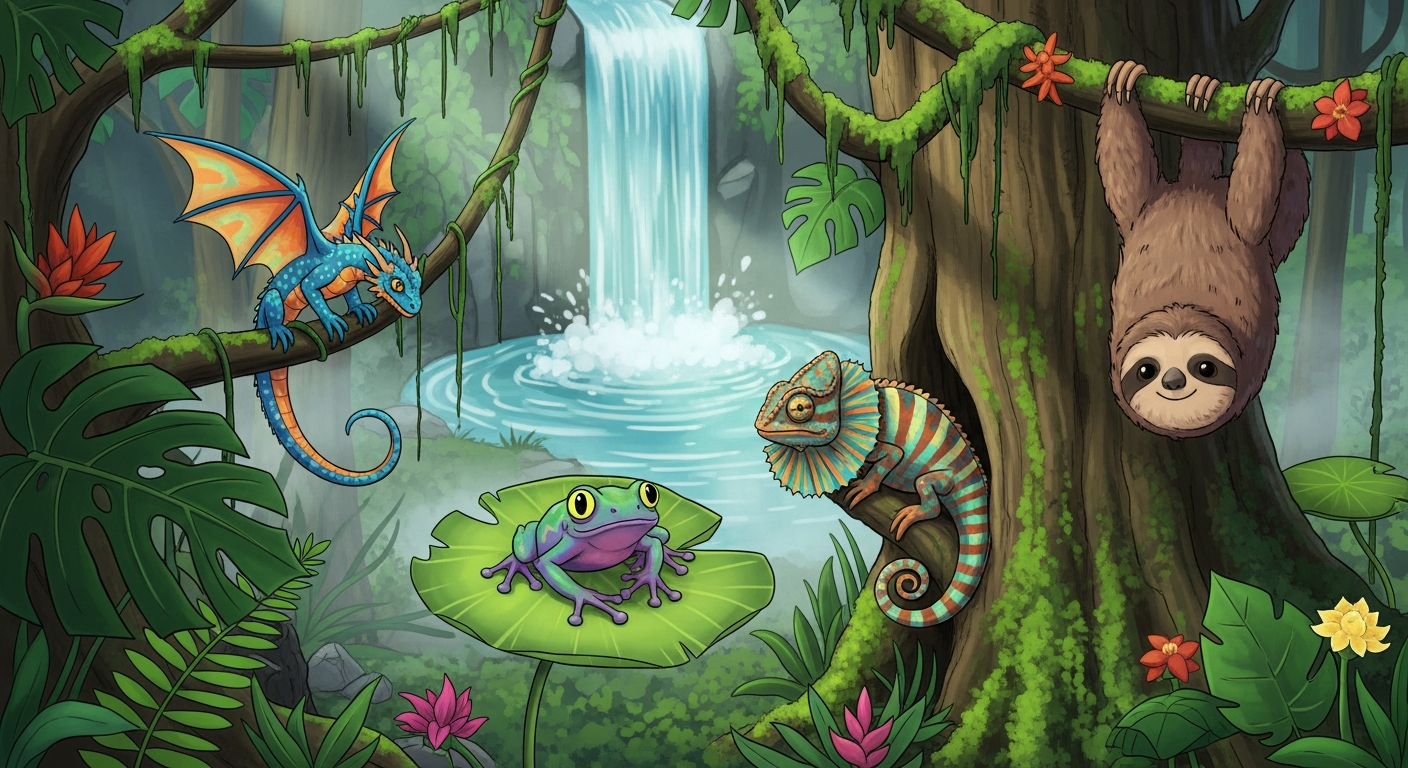
The animal kingdom has many creatures with unique and unusual animal names. Some of these amazing animals, like the tree kangaroos from Papua New Guinea, have features as special as their names. There are also other animals you may only see at a zoo.
Learning more about these animal names, including reptiles, shows us just how much variety there is in the world. Let’s see a few animals whose names are hard to forget, just like the way they look.
6. Axolotl
The axolotl is a kind of amphibian that many people find interesting. Its name is also quite special. Some people call it the “Mexican walking fish,” but it is not a fish. It is a salamander, and it stays underwater for its whole life. Axolotls come from lakes close to Mexico City.
One thing that makes axolotls stand out is that they can grow back body parts. If they lose a limb, have damage to organs or even some brain tissue, they can regrow it. This is why a lot of people use them for science work.
Axolotls are not like some other amphibians. Most amphibians get lungs and go on land when they get older. But axolotls keep their gills outside their body and keep living in water even when they are grown up. In the wild, their colour is usually brown, not the pink and white colour you see when people keep them in tanks.
7. Quokka
The quokka is often called the “world’s happiest animal.” It is a small marsupial that comes from a few small islands close to Western Australia. The quokka appears to be friendly. Its clear smile and unique features, like some white stripes, have made it very popular on social media.
Quokkas are about the size of a regular cat. They have short tails. These animals, including wombats, are close relatives of kangaroos and wallabies. Quokkas eat plants. Most of their food comes from leaves, stems, and bark.
A quokka will live with a group of animals, much like the platypus. These creatures enjoy companionship and often come up to people to say hello. But it is against the law to touch or feed them. This rule is there to keep their health and natural ways safe.
8. Okapi
The Okapi is one of the most mysterious forest animals in Central Africa, alongside the baboon. It has stripes like a zebra on its legs and a body that looks like a horse. People once thought it was a make-believe animal. The okapi is indeed real. It is the only living relative of the giraffe.

Okapis are shy. They hid from people, so the Western world did not know about them until the early 1900s. They live deep in the rainforests of the Democratic Republic of Congo in Africa. This is very different from where New World monkeys live.
The stripes on their legs help them blend in with the sunlight in the forest. If you want to see an okapi today, you can find them in some zoos, even in parts of Europe. There, breeding programmes help protect these rare animals.
Uncovering Cultural Significance
Animal names often carry cultural significance and are deeply rooted in the traditions and folklore of different regions. In some cases, animals are considered sacred or hold symbolic meaning.
For example, the revered cow in Hinduism is called “gomata” in Sanskrit, which translates to “mother cow.” The Chinese see the panda as a symbol of peace and harmony. They call it “xiong mao,” which means “bear cat.”
Furthermore, certain animal names have become synonymous with national identity or cultural pride. The bald eagle, as the national bird of the United States, exemplifies this connection. Its name not only represents a specific species but also embodies a sense of patriotism.
Conclusion
This A-Z list of animal names has the koala and many useful facts for animal lovers who want to learn more. You will find all kinds of animals here. From the large African Elephant to the playful Axolotl, each name helps you learn new words and shows how diverse animals can be.
Knowing about these names can help you care more about wildlife and could make you want to help protect them. As you go through these animal names, remember to share this page on social media. It can help others find out more and see the beauty that is in the animals on our planet.
Frequently Asked Questions
What are some common animal names every learner should know?
Everyone should know the common English animal names, including the leopard, to help with their vocabulary. This group includes farm animals like cows and chickens. It covers wild animal names such as lion and elephant. It also has pets like a cat and a dog.
What are the collective group names for animals?
Many groups of animals have their own special names. For example, there is a school of fish, a pod of dolphins, a pride of lions, and a murder of crows. These names show how we talk about a group of animals as one unit.
What are the names of baby animals for different species?
Baby animals in the animal kingdom have their own names. For example, we call a baby dog a puppy. A baby cat is called a kitten. A baby sheep is known as a lamb. The word fox can also refer to baby animals. The names of baby animals are often different for mammals, birds, and amphibians.
What is the fastest wild animal?
The quickest wild animal is the Brazilian free-tailed bat. It can fly at speeds of over 99 miles per hour (160 kilometres per hour). The cheetah is the fastest land animal. It can run up to 60-70 miles per hour (97-113 kilometres per hour) for short distances. So whether you’re flying or running, nature has some serious speedsters!
What’s the difference between amphibians and reptiles?
Amphibians and reptiles are both cold-blooded vertebrates, but they belong to different classes and have distinct characteristics.
Amphibians, like frogs and salamanders, usually begin their life in water using gills to breathe. They later change into adults with lungs that let them breathe air. They usually have moist skin that aids in respiration and require a damp environment to survive.
Reptiles, such as snakes and lizards, have scales that guard their bodies and stop water from leaving. This helps them live well in dry places. They lay eggs with hard shells or give live birth, depending on the species, and do not undergo metamorphosis.
In summary, amphibians usually need water to reproduce and have skin that lets things pass through. On the other hand, reptiles are better suited for life on land with their waterproof scales.