Pigs are one of the most rewarding animals to keep — they grow fast, they eat a wide range of feed, and pork is in steady demand across Nigeria. But the breed you choose shapes everything: how quickly your pigs reach market weight, how many piglets a sow raises, and how well your animals cope with our climate. Here are the main breeds Nigerian farmers keep, from the big commercial types to the hardy local pig.
Large White (Yorkshire)
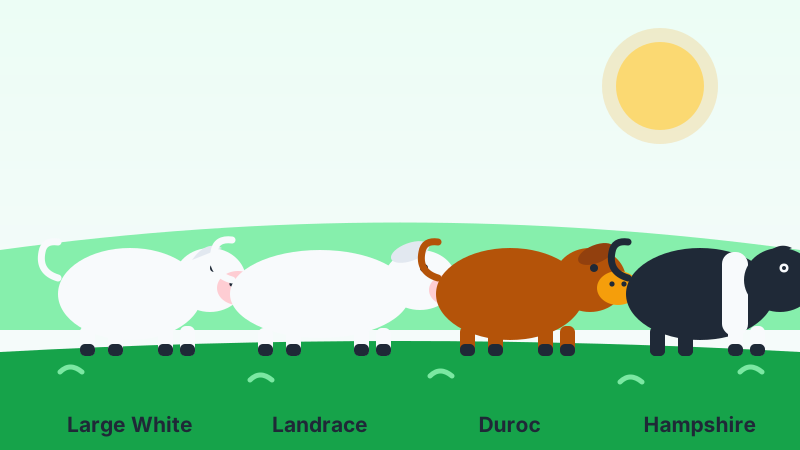
The Large White is the workhorse of commercial pig farming. It is a big, white pig with upright (pricked) ears and a long, deep body. It grows quickly and puts on lean meat well, which is why it is one of the most common exotic breeds both in Nigeria and worldwide. Sows are good mothers that produce large litters and milk well. They do need decent housing and feed to reach their potential, and they do not like extreme heat, so always give them shade and plenty of water.
Landrace
The Landrace is also white, but it has a very long body and big ears that droop down over its face. It is a classic "bacon-type" pig — long and lean. Landrace sows are famous for being excellent mothers: they milk well and have plenty of teats, which makes them brilliant at raising large litters. Because of this, the Landrace is very popular for cross-breeding, especially with the Large White.
Duroc
The Duroc is easy to recognise by its reddish-brown (rusty) colour and drooping ears. It is a fast grower and one of the most efficient breeds at turning feed into meat. It is also hardier and a bit more heat-tolerant than some other exotic breeds. Farmers prize the Duroc for the quality of its meat — its pork is juicy and well-marbled. It is often used as the boar (male) in cross-breeding to improve the meat quality of the herd.
Hampshire
The Hampshire is a striking-looking pig: black with a white "belt" running around its shoulders and front legs, and upright ears. It is muscular and lean, and it grows well. Hampshires are hardy, active pigs that produce a meaty carcass. Like the Duroc, the Hampshire is often used as the male in cross-breeding to add lean meat to the offspring.
The local Nigerian pig
The local (indigenous) pig is smaller than the exotic breeds and often black, brown or patched, sometimes with coarse hair. It grows more slowly and takes longer to reach market weight, but what it lacks in speed it makes up for in toughness. Local pigs tolerate heat well, forage for their own food, do fine on household scraps and rough feed, and resist many local diseases. The sows are attentive mothers, though their litters are usually smaller than those of exotic sows. For a backyard keeper with basic facilities and limited feed, the local pig is the cheapest and easiest animal to manage.
How to choose a breed
There is no single "best" breed — it depends on your situation. Ask yourself these four questions:
- What is your purpose? If you want fast growth for market, Large White and Landrace (or their cross) are the top commercial choice. If meat quality matters most, a Duroc or Hampshire adds flavour and leanness. If you want a low-cost, low-maintenance pig, the local breed is hard to beat.
- What feed can you afford? Exotic breeds need better, more consistent feed to grow well. Local pigs cope happily on scraps, forage and rough feed.
- What is your climate like? Local pigs and hardier exotics like the Duroc handle heat better. White exotic breeds need shade, water and cooling to thrive in hot weather.
- Will you cross-breed? Many farmers cross a Large White with a Landrace to get fast-growing, prolific hybrid pigs. Using a Duroc or Hampshire boar over your sows can improve meat quality and lean yield. Cross-breeding is a smart way to combine the strengths of two breeds.
Key takeaways
- Large White and Landrace are the top commercial breeds and cross well together.
- Duroc and Hampshire add meat quality and hardiness.
- The local Nigerian pig is the hardiest and cheapest to keep — but grows more slowly.
- Match the breed to your purpose, feed and climate.