This is the first decision every new poultry farmer faces — and it shapes everything else: your capital, your feed, your timeline and your market. Broilers and layers are two different businesses wearing the same feathers. Here's how to choose.
1. The core difference
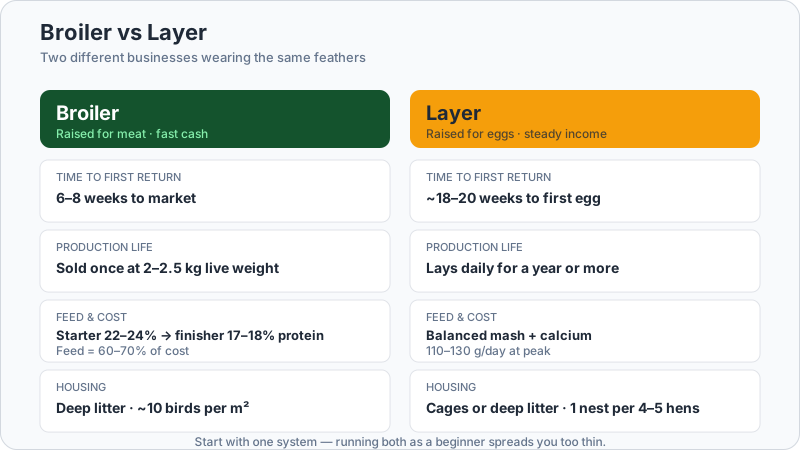
- Broilers are raised for meat. They grow fast and are sold at six to eight weeks.
- Layers are raised for eggs. They start laying at about 18–20 weeks and keep producing for a year or more.
2. Time to first return
- Broiler — money back in six to eight weeks. The fastest cash cycle in poultry.
- Layer — you feed for four to five months before the first egg. Slower start, but then a steady daily income for a year or more.
3. Feed and cost
- Broiler — high-protein starter, then finisher. Feed is 60–70% of cost, and the profit is small because the cycle is fast.
- Layer — a balanced layer mash (ground-up feed mix) with enough calcium for shells. Feed cost is spread over a long productive life.
Both reward good feed management — see how to blend cheaper poultry feed in Nigeria.
4. Which should a beginner choose?
- Choose broilers if you want a fast cycle and quicker feedback to learn from — but be ready for small profit.
- Choose layers if you can wait for the first egg and want steadier, longer-term income.
Start with one system. Running both at once as a beginner is the fastest way to spread yourself too thin.
For the full route for each, read broiler production from day-old to market and profitable egg production with layers, and budget with our cost of starting a poultry farm.
Key takeaways
- Broilers = meat, six to eight weeks, fast cash, small profit.
- Layers = eggs, ~20 weeks to first egg, steadier long-term income.
- Match your choice to your capital and patience.
- Start with one system, not both.